
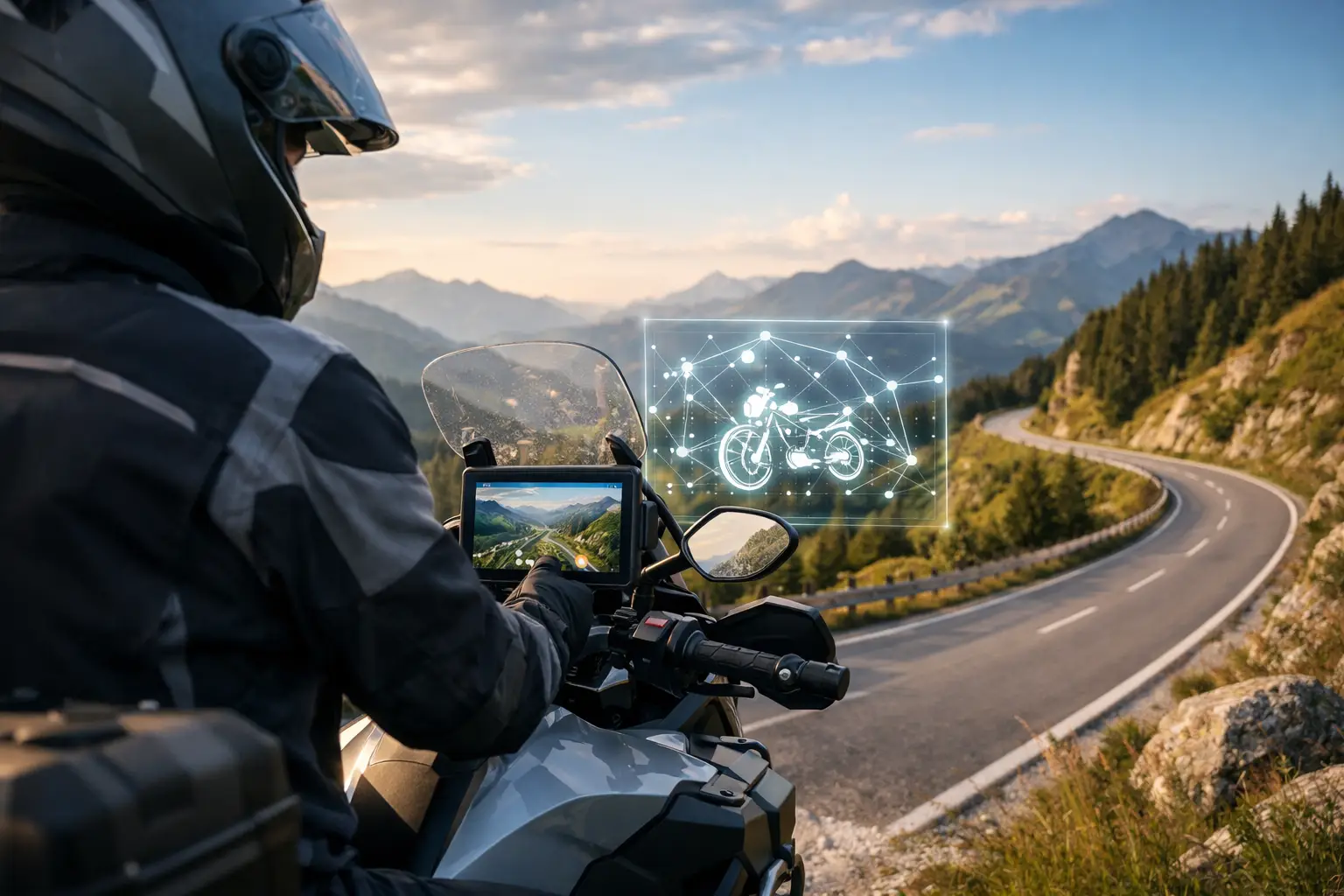
An AI motorcycle route planner builds rides around your time, skill, bike, and weather so you spend less planning and more time chasing good roads today.
A great motorcycle day rarely starts with staring at five tabs of maps, weather forecasts, rental listings, and old forum posts. It starts with a simple question: how do you want to ride? An AI motorcycle route planner turns that answer into a practical route built around your real trip, whether that means a relaxed coastal cruise, a half-day loop through mountain curves, or a multi-day fly-and-ride vacation.
For riders, the value is not that AI can draw a line across a map. Plenty of apps can do that. The useful part is choosing roads that make sense for the motorcycle, the rider, the available daylight, the forecast, and the kind of experience you actually came for.
What an AI motorcycle route planner should do
A motorcycle route is more than distance and arrival time. A 140-mile ride along the California coast can be an easy, open-road cruise. The same mileage through tight Sierra switchbacks, with construction delays and a late-afternoon thunderstorm, can become a long and demanding day.
A purpose-built planner should account for the details a general map tends to miss. Tell it where you are starting, how long you have, your experience level, preferred bike style, and whether you want views, twisties, food stops, or a little of everything. It should then shape the ride around those priorities rather than merely finding the fastest route.
That changes the planning conversation. Instead of searching for “best motorcycle roads near Los Angeles” and sorting through advice written for someone else’s trip, you can ask for a three-hour beginner-friendly loop from Santa Monica with ocean views and light traffic. Or request a full-day sport-touring route from San Francisco that includes Highway 1 scenery, fuel stops, and enough time to enjoy lunch without riding home in the dark.
Good routes begin with honest rider inputs
The best route recommendation is only as good as the information behind it. A rider on a rented Harley touring bike may want a very different day than someone on a lightweight naked bike or an adventure bike with gravel experience.
Start with your non-negotiables: travel dates, starting point, ride duration, and whether you need to return the motorcycle to the same location. Then add the factors that shape the road itself. Be candid about your skill level. There is no prize for selecting “advanced” and getting sent onto a narrow, technical road with blind decreasing-radius corners when you wanted a calm vacation ride.
Your riding goal matters just as much. A newer rider may prefer smooth pavement, predictable curves, frequent fuel, and easy places to pull over. An experienced rider may want tighter canyon sections, elevation changes, and fewer interstate miles. A couple riding two-up may favor scenic overlooks and comfortable pacing over aggressive backroad mileage.
An AI-powered planner can use those preferences to make smarter trade-offs. More twisties often means lower average speeds. Remote scenery can mean limited cell service and fewer fuel options. A route with the best views may be foggy before noon or packed with weekend traffic. The right answer depends on the day you want, not a generic “top 10 roads” list.
Why live weather belongs in the route, not beside it
Weather is where many otherwise solid motorcycle plans fall apart. A forecast that looks harmless at home can be a different story at elevation, near the coast, or on the far side of a mountain pass.
Consider a ride from San Francisco toward Big Sur. Morning marine layer can make coastal pavement cool and damp even when inland temperatures are comfortable. On a summer run through the Angeles National Forest, heat can build quickly in the lower elevations while ridgelines stay noticeably cooler. In the Rockies, afternoon storms can turn a beautiful scenic loop into a lightning-and-hail problem faster than most riders expect.
A useful AI motorcycle route planner incorporates live weather into the decision, showing expected temperatures, rain chances, and timing along the route. That gives you options before the kickstand goes up: leave earlier, reverse the loop, stay lower, pack an extra layer, or choose a different ride altogether.
Weather awareness does not replace rider judgment. Wind, low visibility, standing water, wildfire smoke, and sudden temperature drops still require a decision at the roadside. But planning with current conditions beats discovering a bad forecast after you are already committed to a remote stretch of pavement.
Building a route that fits the clock
One of the most common trip-planning mistakes is confusing route distance with ride time. A 200-mile interstate day and a 200-mile mountain day are not remotely comparable.
On curvy roads, average speeds fall fast. Add photo stops, fuel, lunch, traffic behind RVs, roadwork, and the occasional missed turn, and an ambitious route can become a grind. For a vacation ride, that is the opposite of the point.
When planning, leave room for the parts that make motorcycle travel memorable. A sensible day route includes time to stop at overlooks, stretch, hydrate, and look around a town you did not expect to like. For new riders, that margin also reduces the pressure to rush corners or ride tired. For experienced riders, it keeps a technical day fun instead of turning it into a mileage contest.
As a rough rule, a scenic day with lots of curves often needs more time than a route estimate suggests. If you have six hours door to door, do not build a six-hour ride. Build a route that gives you a comfortable buffer, especially if you need to return a rental bike before closing time.
A practical California example
Say you are visiting Los Angeles, renting a motorcycle, and have one clear Saturday. You want curves and views but have not ridden California mountain roads before. A good plan might avoid trying to stack Malibu, Angeles Crest, and Palm Springs into one oversized day.
Instead, choose one focused loop. Start early, ride the Malibu canyons while temperatures are mild, stop near the coast, and return before beach traffic gets heavy. The route can prioritize pavement quality, moderate curves, predictable fuel access, and daylight rather than chasing every famous road in the region.
That is not settling for less. It is how you finish the ride wanting another day on the bike.
Route planning for fly-and-ride trips
For travelers, rental availability can shape the trip before the route does. The motorcycle you can actually pick up may influence luggage capacity, passenger comfort, range, and how much technical riding makes sense.
An AI trip planner that includes nearby motorcycle rental options saves a lot of friction here. Rather than deciding on a route first and then discovering the nearest rental shop is an hour away, you can plan the ride as one connected experience. Choose the destination, dates, bike preference, and ride style, then build from what is available.
This is particularly useful in major riding markets such as California, Arizona, Nevada, Colorado, and Florida. A visitor may have a full day in San Diego, a weekend out of Las Vegas, or five days starting in Denver. Each trip calls for a different balance of riding time, weather, rental logistics, and overnight stops.
For example, a desert route may look simple on a map but demand more water, earlier starts, and careful fuel planning. A mountain trip may require flexible routing around passes, snow, or afternoon storms. The best itinerary is not the one with the most pins. It is the one that leaves enough room to adapt.
Where AI helps, and where riders still need to lead
AI is excellent at compressing research. It can compare route options, factor in ride duration, surface the likely conditions, and organize the details that usually live across separate apps. CharterNow.ai is built around that rider-first conversation: tell it your trip, and it helps turn the idea into a route you can realistically ride.
Still, no planner can see every fresh patch of gravel in a blind corner, a surprise closure, or a local event that fills the roads with traffic. Check conditions before departure, follow posted signs, and adjust your pace for the pavement in front of you. Turn-by-turn navigation is helpful, but it should never compete with your attention.
The strongest use of AI is not handing over every decision. It is arriving at the starting point prepared, with a route that fits your day and enough confidence to change it when the road tells you otherwise.
Make the plan, then leave room for the ride
The best motorcycle routes usually have structure without feeling overmanaged. Know where fuel is likely, when weather may shift, how long the day should take, and where you can turn back or shorten the loop. Then give yourself permission to stop for the overlook, take the side road that looks promising, or linger over lunch in a mountain town.
That is what an AI motorcycle route planner should give you: less time assembling information, more time making good decisions on two wheels. The road is waiting. Pick the ride that fits, pack for the conditions, and go see where it leads.