
Learn how to choose motorcycle rental size for your skill, route, passenger, and luggage, so every mile from city streets to mountain roads feels right.
The rental counter is not the place to discover that your dream bike is too tall to confidently back out of a parking space. Knowing how to choose motorcycle rental size starts well before pickup day, with an honest look at the roads you want to ride, the gear you are carrying, and the kind of motorcycle you can manage when the pavement is sloped, wet, or packed with traffic.
A rental motorcycle should feel like a capable travel partner, not a machine you spend all day wrestling. Bigger is not automatically better. The right size gives you enough power for the route, enough room for your body and luggage, and enough confidence to enjoy the twisties instead of thinking about the next stop sign.
Motorcycle rental size is more than engine displacement
When riders say “size,” they often mean engine size in cubic centimeters. That matters, but it is only one part of the fit. A 650cc adventure bike can be taller and feel more top-heavy at low speed than a low-slung 1,200cc cruiser. A lightweight 400cc standard may be the smarter choice for a visitor riding San Francisco hills, even if they have experience on a larger bike at home.
Think about five things together: seat height, wet weight, handlebar reach, engine character, and carrying capacity. The bike needs to fit your body while also fitting the trip.
Seat height is usually the first practical check. You do not need both feet completely flat on the ground, but you should be able to put a solid foot down and stabilize the bike without sliding off the seat. This matters most at gas stations, gravel pullouts, steep overlooks, and urban intersections where the road may be crowned or uneven.
Weight becomes obvious at walking speed. A loaded touring bike can be wonderfully stable at 70 mph on the interstate, then feel like a serious commitment when you are maneuvering it out of a hotel lot. If your recent riding has been on a 500-pound motorcycle, jumping to an 850-pound bagger with a passenger and full luggage is a major change, regardless of your license endorsement.
Match the rental size to your real riding experience
Your riding résumé is useful only if it reflects what you have ridden lately. A rider who owned a 750cc bike ten years ago but has not ridden since should not book the largest touring model available for a week in the Rockies. Rental trips add unfamiliar roads, new traffic patterns, navigation prompts, luggage, and the pressure of a limited vacation schedule.
Be specific when comparing your home bike with a rental. Consider the weight, riding position, seat height, and throttle response, not just the number on the side cover. Modern middleweight motorcycles often have more than enough performance for US highways and mountain roads.
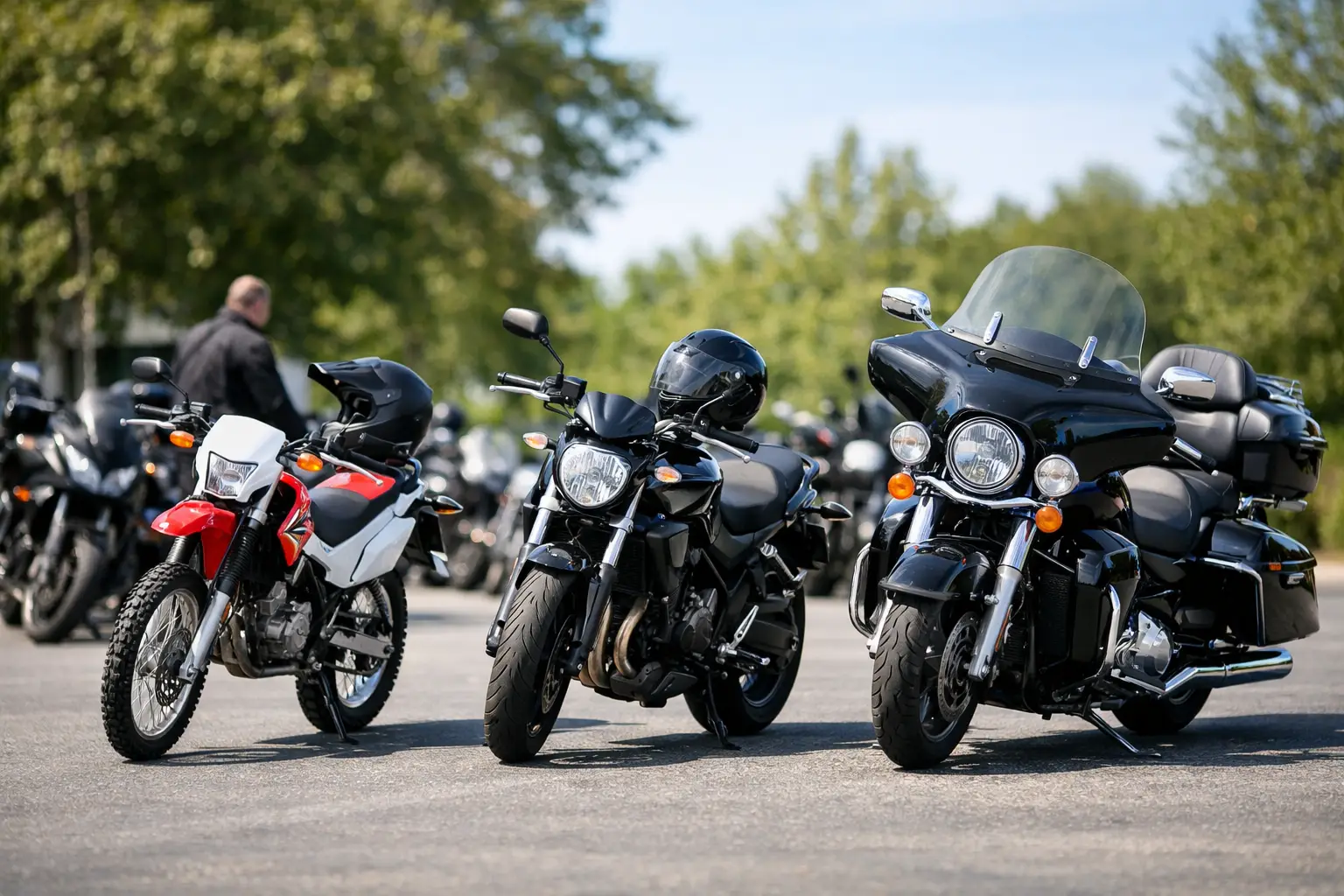
| Rental category | Typical fit | Best use | |---|---|---| | 300cc to 500cc lightweight standard or cruiser | Newer riders and riders who value low weight | City riding, scenic day loops, slower coastal roads | | 500cc to 900cc middleweight | Most riders with recent street experience | Weekend trips, canyon roads, solo touring, mixed routes | | 900cc to 1,300cc touring or large cruiser | Experienced riders comfortable with weight | Two-up highway travel and luggage-heavy road trips | | Large adventure bike | Taller, experienced riders | Long-distance pavement, rough access roads, limited unpaved riding |
These ranges overlap. A 650cc parallel twin can be easygoing, while a 600cc sportbike can have a sharp riding position and quick power delivery. Ask the rental provider for the model’s actual seat height and wet weight rather than relying on category labels.
If you are between sizes, rent the easier bike
For most fly-and-ride travelers, the slightly smaller or lighter option is the better call. You will lose very little on a California coastal route or a Blue Ridge Parkway ride, and gain a lot in low-speed confidence. A middleweight bike is also less tiring when you are adapting to jet lag, summer heat, unfamiliar road surfaces, and a full day in the saddle.
The exception is a route built around high-speed interstate miles, a passenger, and substantial luggage. In that case, too small can feel busy and cramped. The goal is not the smallest motorcycle possible. It is the smallest motorcycle that comfortably handles your actual load and riding plan.
Choose a bike for the route, not the photo
A rental listing may show a big touring bike against a desert horizon or an adventure machine parked beside a dirt road. That does not mean it is the right tool for your itinerary.
For a day ride through Malibu, the Santa Monica Mountains, or the backroads outside Asheville, a light standard, sporty middleweight, or nimble cruiser makes repeated curves more enjoyable. You can turn easily, stop at viewpoints without anxiety, and spend less energy muscling the bike through tight parking areas.
For a multi-day loop from Los Angeles to the Central Coast, or a long run between national parks, wind protection and luggage space start to matter more. A midsize sport-tourer, touring cruiser, or full-dress tourer can make long highway stretches far more comfortable. But check whether the added fairing and panniers make the bike wider than you are used to handling.
Adventure bikes deserve an especially honest assessment. They are excellent for broken pavement, wide-open Western routes, and access roads to trailheads or remote campgrounds. Their tall seat height can be intimidating, though, and “adventure-ready” does not mean a rental bike is set up for technical off-road riding. If your plan includes dirt, confirm the rental company’s policy, insurance coverage, tire setup, and permitted road types before you book.
Weather can change the right choice
A large windshield and fairing are welcome when live weather shows a cold morning or a long stretch of rain. On the other hand, a top-heavy bike becomes harder to catch if your boot slips on wet pavement at a fuel stop. Riders planning high-elevation routes should also expect temperature swings, afternoon storms, and gusty crosswinds.
Plan the bike and route together. If conditions look rough, shorten the day, choose lower elevations, and favor a motorcycle you can confidently manage at slow speed. A good trip is not measured by how many miles you force into the schedule.
Account for passengers and luggage honestly
A passenger changes the equation more than most renters expect. The bike needs a proper passenger seat, secure footpegs, suspension capacity, and enough power to cruise without feeling strained. Just as important, you need experience balancing a motorcycle with another person moving behind you.
If you have never ridden two-up, a vacation is a poor time to learn on a large rental. Consider separate motorcycles, a lighter route with shorter days, or a quick skills refresher before the trip. Communication at stops matters too: your passenger should wait for your signal before getting on or off, especially when the bike is on uneven ground.
Luggage has a similar effect. Soft bags for a one-night trip are very different from two hard panniers, a top case, rain gear, camera equipment, and shopping from every stop along the route. Do not assume a bike has storage because it looks like a touring model. Check the included luggage, its capacity, whether it locks, and whether helmets must fit inside overnight.
Pack for the motorcycle you rent, not the car you left at the airport. A compact duffel, layers, rain gear, and a small day bag usually work better than a full-size suitcase. Less weight also makes loading, unloading, and maneuvering easier.
Test the fit before you leave the lot
At pickup, take a few minutes to set the bike up. Adjust mirrors, identify turn signals and hazard controls, locate the fuel range display, and learn how the luggage latches. If the motorcycle has selectable ride modes, traction control, cruise control, or an electronically adjustable windshield, ask for a clear demonstration.
Then do a small, unhurried test loop. Practice starts, stops, tight turns, and a little braking before merging into vacation traffic. Pay attention to whether your wrists are bent uncomfortably, your knees are cramped, or you cannot get stable footing at a stop. A seat or handlebar adjustment may solve the problem. If the fit is clearly wrong, speak up before the bike is loaded and the day gets moving.
Also inspect the bike with the rental agent. Photograph existing scratches, check tire condition, confirm the fuel requirement, and make sure your navigation mount and charging setup are secure. These small checks protect your trip from avoidable friction.
Use your itinerary to make the final call
The best rental choice comes from a route that reflects your skill level and available time. A rider planning a relaxed Big Sur day may want a light bike and frequent scenic stops. Someone covering 300-mile days between Utah parks may prioritize wind protection, range, and a comfortable seat. There is no universal “best” size.
CharterNow.ai can help connect those decisions by building a motorcycle-specific route around your dates, riding experience, preferred bike style, ride duration, and live weather. That gives you a clearer idea of whether your trip calls for a nimble middleweight, a two-up tourer, or something in between.
Choose the bike that lets you look through the next curve, not down at the pavement wondering whether you can hold it up. The road is waiting, and the right-sized rental leaves you free to ride and enjoy it.