
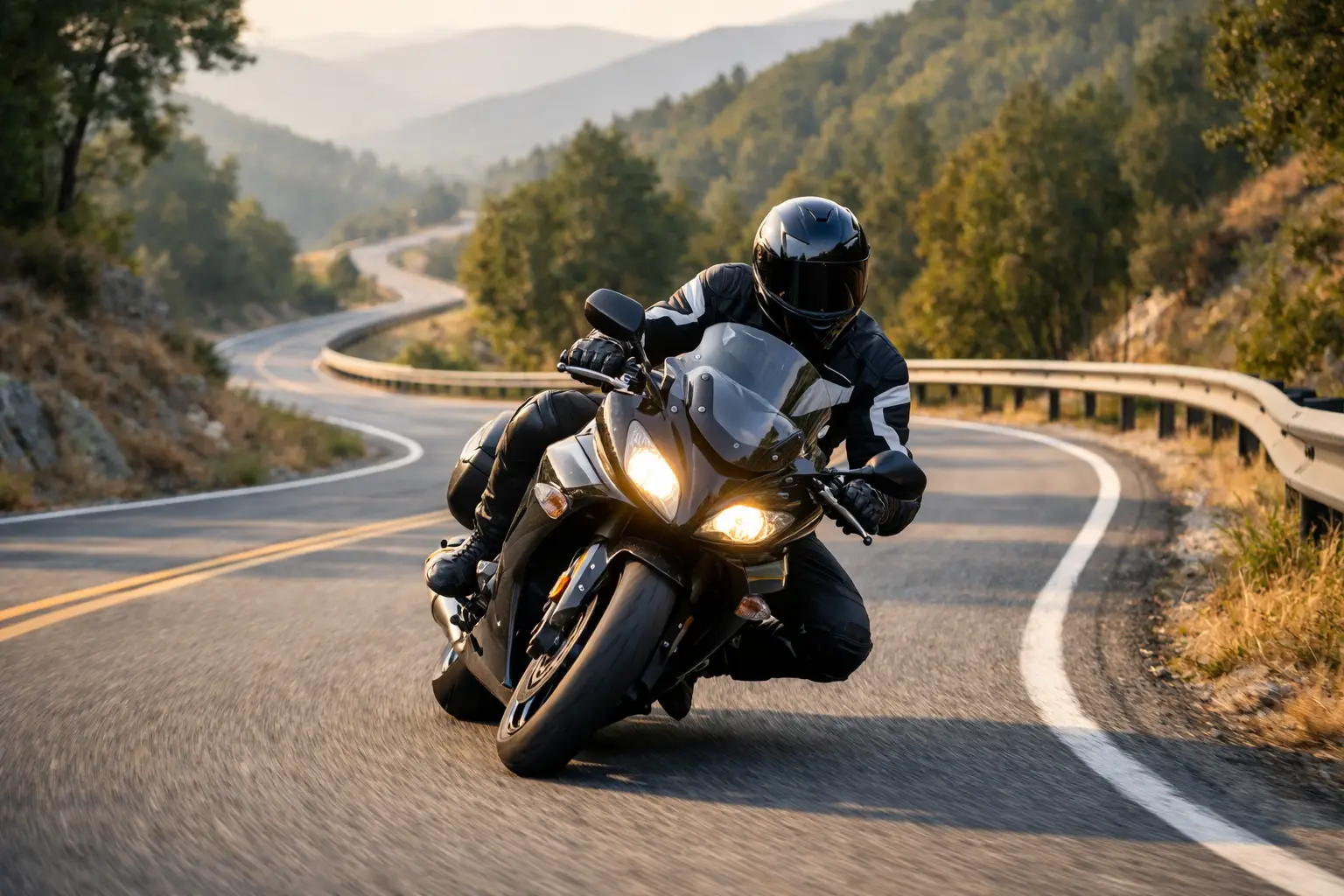
Plan better rides on twisty motorcycle roads with practical cornering advice, weather checks, pacing tips, and routes matched to your real skill level.
A great curve can make a 200-mile day feel like a victory lap. A bad one - blind, off-camber, gravel-strewn, and entered too hot - can ruin the whole trip. That is the appeal and the reality of twisty motorcycle roads: they reward attention, smooth inputs, and a route plan that respects the road rather than just chasing the biggest number of turns.
For riders building a weekend loop, flying in for a rental, or finally taking that coastal or mountain vacation, the best twisties are not always the tightest ones. They are the roads that fit your experience, your bike, the weather, and the amount of energy you will still have after lunch.
What Makes a Road Worth Riding?
A twisty road is more than a line of switchbacks on a map. Good motorcycle roads have a rhythm. Corners link naturally, the pavement gives you predictable feedback, sightlines are reasonable, and the scenery earns a few planned stops instead of distracting you mid-corner.
California has its famous examples: Highway 1 when conditions cooperate, the Santa Monica Mountains, the back roads above Ojai, and the Sierra foothills. But the same ingredients show up across the country. Think Arkansas routes through the Ozarks, the Blue Ridge and Smokies, Hill Country west of Austin, or the high-desert curves around central Oregon.
The road that suits one rider may be the wrong call for another. A newer rider on a rented cruiser may enjoy a flowing canyon road with 35 to 50 mph bends. An experienced rider on a sport-touring bike may want tighter elevation changes and more technical corner sequences. Neither choice is less legitimate. The goal is to finish the ride wanting another pass, not feeling relieved it is over.
Flowing curves versus technical roads
Flowing roads let you settle into a steady pace. They tend to have broader radii, clearer sightlines, and fewer abrupt braking zones. They are ideal for building confidence, carrying a passenger, or getting acquainted with an unfamiliar rental motorcycle.
Technical roads demand more. Expect decreasing-radius turns, blind crests, hairpins, changing pavement, and rapid elevation shifts. They can be fantastic, but they require more mental bandwidth. On a long day, even skilled riders can lose precision when fatigue starts stacking up. Save the hardest section for the part of the day when you are fresh, not for the final hour before sunset.
Ride the Road You Can See
The most useful cornering rule is also the least glamorous: never ride faster than you can stop within the distance you can see is clear. On public roads, that clear space can disappear behind a blind bend, a rock wall, a stand of trees, or a dip in the pavement.
Set your entry speed before the corner. Look through the turn toward the exit, keep your hands light on the bars, and roll on the throttle smoothly once you can see where the road goes. If the corner tightens, resist the urge to stare at the guardrail or centerline. Turn your eyes farther toward the available exit and use calm, deliberate lean and speed adjustments.
There is no prize for late braking on a public road. The rider who enters a little slower and exits cleanly is usually faster over a full day than the rider repeatedly recovering from rushed entries. Smooth riding also makes your passenger more comfortable, preserves tire grip, and leaves room for surprises.
Treat every blind corner as occupied
On popular twisty motorcycle roads, assume something is around the next bend: a slow RV, a cyclist, a deer, a pickup truck cutting the centerline, or a patch of gravel dragged out by a driveway. In mountain areas, runoff can carry sand and small rocks across the pavement long after the rain has stopped.
Hold a lane position that gives you the best view without crossing the centerline. On right-hand turns, that often means setting up farther left within your lane. On left-hand turns, position farther right. The exact line changes with the road, but the principle stays the same: create sight distance and space from the hazards you cannot yet see.
Conditions Change the Entire Ride
A route can look perfect at breakfast and become a bad idea by early afternoon. Coastal fog can make a normally easy road cold and slick. Mountain thunderstorms can turn shaded corners into leaf-covered traps. Desert heat can drain your focus long before you notice that your decisions are getting slower.
Check the weather for the route itself, not just the town where you slept. A 20-degree temperature difference between sea level and a mountain pass is common. Look at wind, rain timing, and overnight lows if you are riding early. Also consider recent weather. A dry forecast after a storm does not mean the roads are immediately clean.
Season matters as much as the day’s forecast. In spring, snowmelt, potholes, and gravel are common in higher elevations. Summer brings tourist traffic, construction, and heat. Fall can deliver excellent riding temperatures along with wet leaves in shaded sections. Winter may make a high-elevation route impractical even when the valley is sunny.
If you are renting, ask about tire condition, tire pressures, luggage setup, and roadside support before rolling out. A motorcycle that feels fine around town can feel very different on a long, technical descent with a loaded top case.
Pace a Day Around Twisty Motorcycle Roads
Maps are famously optimistic about motorcycles in the mountains. A route with 150 miles of tight curves can take longer and demand more energy than 300 miles of interstate. Build your day around ride time, not only mileage.
For a full day of technical riding, plan short breaks before you feel tired. A five-minute stop for water, a stretch, and a quick look at the route can reset your concentration. Fuel up early in remote areas. Small mountain towns may have limited hours, and the last gas station on the map is not always open when you arrive.
Be equally honest about your group. The right pace is one that keeps the least experienced rider calm and predictable. Establish a simple regroup plan at major turns, let riders ride their own line, and avoid the pressure to keep a tight formation through corners. Staggered formation works on straight sections; in curves, each rider needs the full lane to choose a safe position.
For solo riders, send your route and expected arrival time to someone before heading into a low-service area. Download navigation for offline use if possible. A phone that cannot load the next turn is not much help at a remote intersection.
Build a Better Loop, Not Just a Harder One
The best route planning blends a few ingredients: a memorable road, reliable fuel, a worthwhile stop, a realistic turnaround point, and an easier exit if weather or fatigue changes the plan. A loop is often better than an out-and-back because it keeps the scenery fresh and gives you options when traffic clogs one section.
Start with your available time. If you have four hours, avoid planning a six-hour route and hoping to make up time. Add a scenic stop or a good lunch destination, but leave room to linger when you find a viewpoint, a roadside pie shop, or an unexpected local recommendation.
This is where motorcycle-specific planning beats a generic driving map. CharterNow.ai can build a ride around your destination, dates, skill level, motorcycle style, and preferred intensity, while factoring in live weather and realistic ride timing. Tell it whether you want easy sweepers, a coastal cruise, or a technical mountain day, then use the route as a smart starting point rather than a rigid contract.
The Skill That Makes Every Road Better
The fastest improvement on twisty roads is not chasing more lean angle. It is improving your vision, braking earlier, and making one clean decision at a time. Practice in low-pressure conditions. Ride familiar curves at a conservative pace and notice where you are looking, when you are getting back on the throttle, and whether your corner entries feel rushed.
If a road feels beyond your current comfort zone, turn around, slow down, or take the alternate route. That is good judgment, not backing down. There will always be another road, another morning, and another chance to ride it well.
The road is waiting. Pick the route that fits, leave margin for the unexpected, and enjoy every curve you can see.