
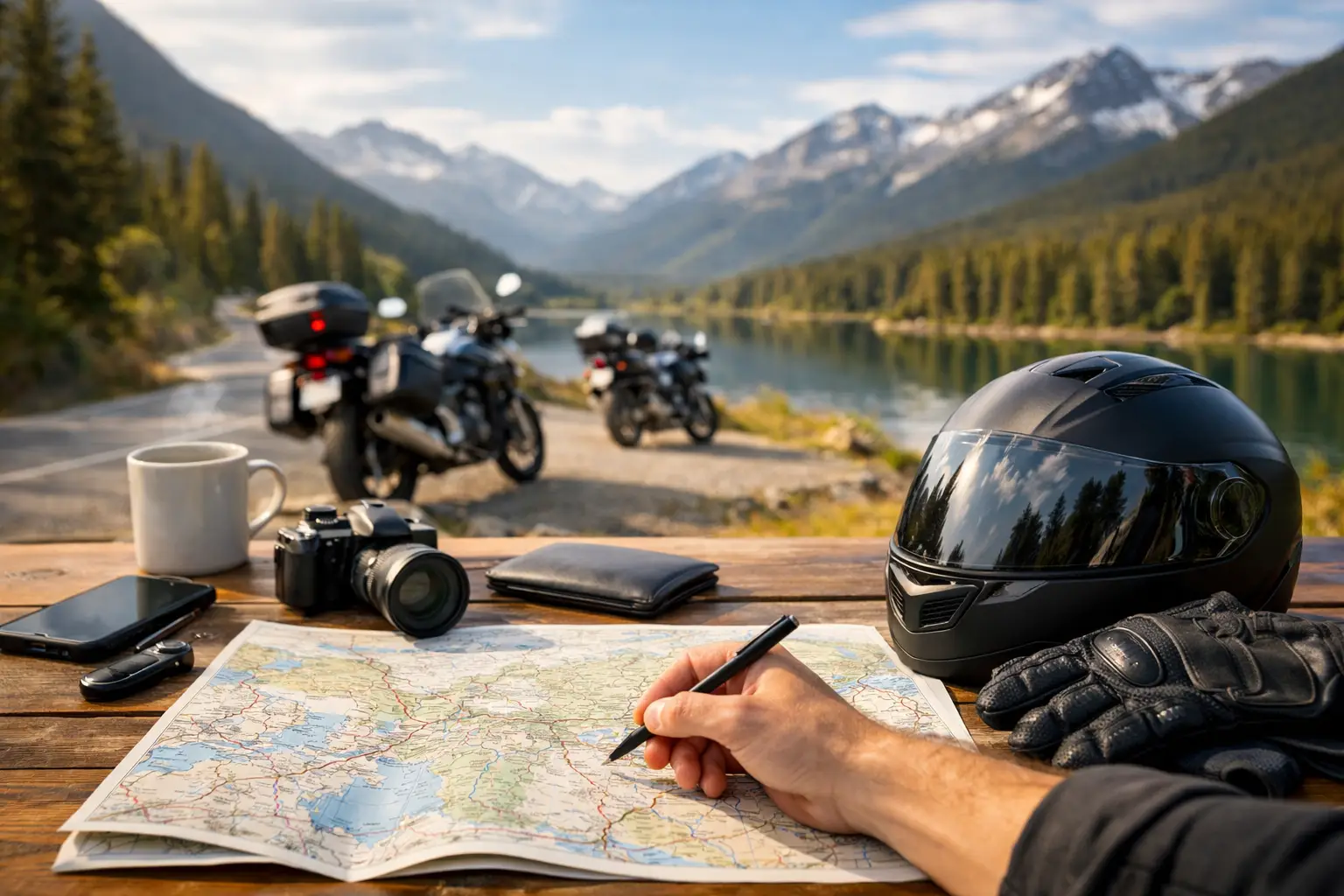
A motorcycle vacation planner turns a dream ride into a road-ready itinerary, matching routes, weather, rentals, pace, and skill before you roll out.
A great motorcycle vacation is rarely ruined by a lack of scenic roads. It gets derailed by a route that looks short on a map but takes eight hours, a rental pickup far from the good riding, or a mountain pass that turns cold and wet by midafternoon. A motorcycle vacation planner should solve those problems before your gloves go on, building a ride around the way you actually want to spend your time.
The goal is not to cram in every famous overlook. It is to arrive somewhere new, get on a bike that suits the roads, and spend your best daylight hours riding rather than troubleshooting logistics. That takes a little more thought than plotting the fastest line between two hotel pins.
Start With the Ride You Want, Not the Destination
Most riders begin with a place: California, the Blue Ridge, the desert Southwest, the Rockies. That is useful, but it is not enough to build a good trip. The same region can offer an easy coastal cruise, a tight technical day in the hills, or a long-distance touring route that feels very different in the saddle.
Start by deciding what a successful ride day feels like. Maybe it is 180 relaxed miles with coffee stops and ocean views. Maybe it is 275 miles of high-country pavement, early starts, and a few serious sections of twisties. If you are flying in and renting, the bike matters too. A rider who is comfortable on a familiar cruiser at home may not want their first day on an unfamiliar, tall adventure bike in gravel or city traffic.
A useful trip brief includes four things: your available ride days, your comfortable daily mileage, your experience with the roads you expect to ride, and the moments you do not want to miss. Those could be coastal scenery, mountain curves, national parks, small-town diners, or simply a quiet two-night base where you can unpack once.
That brief prevents the classic vacation mistake: treating a motorcycle trip like a car road trip. On a bike, fuel stops, gear changes, wind, construction, photo stops, and a great road that begs for a second pass all take time. The miles are part of the day, not just a number to clear.
How a Motorcycle Vacation Planner Builds a Realistic Route
The best routes have rhythm. They start gently while you get familiar with the bike and local traffic, build toward the roads you came for, and leave enough margin for weather or an unplanned stop. A motorcycle vacation planner should account for that rhythm instead of delivering one giant route line.
Build around daylight, not maximum mileage
For many vacation rides, 150 to 250 miles is a satisfying full day. The lower end makes sense on tight mountain roads, busy coastal highways, or routes with frequent overlooks. The upper end can work on open desert pavement or broad touring roads where the pace is steady.
There is no universal number. A newer rider on a rented bike may be happier with 140 miles and a relaxed lunch. An experienced touring rider may comfortably cover 300 miles. The key is to estimate moving time honestly, then add time for fuel, food, gear, traffic, and the places that caught your attention for a reason.
A San Francisco-to-Big Sur ride, for example, can be a memorable day without trying to turn it into a marathon. The coastline deserves time, and Highway 1 conditions can change with closures, fog, and traffic. A smart plan identifies an enjoyable turnaround point, checks alternate roads, and avoids making a dinner reservation that requires racing back through cold coastal air.
Give every day an easy exit
A route is stronger when it has a Plan B. On mountain trips, that may mean identifying a lower-elevation return if storms build over a pass. In the desert, it might mean a shorter loop if temperatures spike. Near major cities, it could be an early departure route that gets you out of traffic before the ride starts feeling like a commute.
This is especially valuable for fly-and-ride travelers. You may not know the local road surface, traffic behavior, fuel spacing, or how quickly conditions change after sunset. A route with alternatives lets you make decisions from the saddle without feeling like you have abandoned the trip.
Use loops when you can
A loop reduces hotel changes, rental coordination, and packing time. It also lets you ride a region rather than merely pass through it. Base yourself for two or three nights near a strong riding area, then use each day for a different direction: coast one day, mountain roads the next, and a shorter local loop before checkout.
Point-to-point trips still make sense when the journey itself is the goal, such as a Pacific Coast ride or a run through the Southwest. Just be realistic about luggage, late arrivals, and whether a one-way rental fee is worth the flexibility. Sometimes it is. Sometimes a loop gives you more quality road time for less hassle.
Weather Is a Route Decision, Not a Packing Detail
Motorcyclists do not need perfect weather, but they do need useful weather information. A 15 percent chance of rain means something different on a low-elevation summer ride than it does on a cold, winding road above 8,000 feet. Wind can be more tiring than rain. Dense fog can make a scenic coastline feel like a white tunnel. Heat can turn a long desert crossing into a poor decision by noon.
Check conditions by route segment, not just by the city where you booked a hotel. Pay attention to temperature changes with elevation, wind direction on exposed roads, precipitation timing, and overnight lows if you are leaving early. In shoulder seasons, confirm that high passes are open before building your entire itinerary around them.
Pack for the conditions you are likely to encounter, but do not overpack for every theoretical scenario. Layers, a waterproof outer shell, ear protection, and a clear or low-light visor solution cover a lot of ground. If your rental bike includes luggage, confirm its capacity before assuming your full travel bag will fit.
Rental Choices Shape the Entire Vacation
A rental is not just transportation from the airport. It determines your confidence, comfort, and the kinds of roads that make sense. Choose a motorcycle that fits your body, your luggage, and your route rather than the bike that looks best in a vacation photo.
A cruiser can be ideal for scenic highways and relaxed town-to-town travel. A touring bike earns its keep on multi-day mileage, especially with a passenger or substantial luggage. A standard or sport-touring bike can be a great match for paved mountain curves. An adventure bike makes sense when the route genuinely includes unpaved roads or rough surfaces, but its height and weight can add stress for riders who are not used to it.
Ask about insurance, security deposits, mileage limits, roadside assistance, helmet availability, and pickup hours. Also ask whether the bike has phone charging, luggage, a windscreen, and navigation support. Those details are less exciting than horsepower, but they can make day one much easier.
If you arrive after a long flight, resist the urge to schedule your most technical route immediately. Pick up the bike, adjust mirrors and controls, get comfortable with the clutch and brakes, and ride a short local loop. Save the big twisties for the morning after a good night's sleep.
Make Navigation Work on a Motorcycle
Navigation that is excellent in a car can be distracting on a bike. You need clear turn prompts, reliable routing, and enough awareness to avoid staring at a screen while the road is asking for your full attention.
Review the route before leaving each morning. Know the major towns, fuel stops, road names, and the point where the route changes character. If a mountain road becomes tighter or a dirt section begins, that should not be a surprise delivered through your headset at the last second.
Download route information for areas with weak service and carry a backup power option for your phone. Mount the device securely, but keep the setup simple. The best motorcycle navigation is there when you need it and quiet when you do not.
This is where a purpose-built tool helps. CharterNow.ai can build a personalized itinerary from a conversation about your dates, skill level, preferred bike style, available hours, and riding goals, then factor in routes, live weather, estimated ride times, and nearby rental options. That is more useful than assembling separate tabs for maps, forecasts, rental listings, and old forum threads.
Leave Room for the Road to Change Your Plan
The best vacation rides have structure without becoming rigid. Book the important things: rental pickup, first-night lodging, any limited-access park entry, and the places where rooms disappear on busy weekends. Then keep some room around the edges.
A roadside sign for a historic town, a recommendation from a gas-station local, or a road that feels too good to leave can become the part of the trip you remember. The trade-off is that flexibility requires margin. Do not schedule every daylight hour, and do not make every hotel arrival dependent on perfect conditions.
Before each ride, do a quick walk-around, check fuel range, look at the weather one more time, and decide where you will stop first. Then put the phone away, settle into the bike, and let the route do its job. The road is waiting. Make sure your plan leaves enough room to enjoy it.