
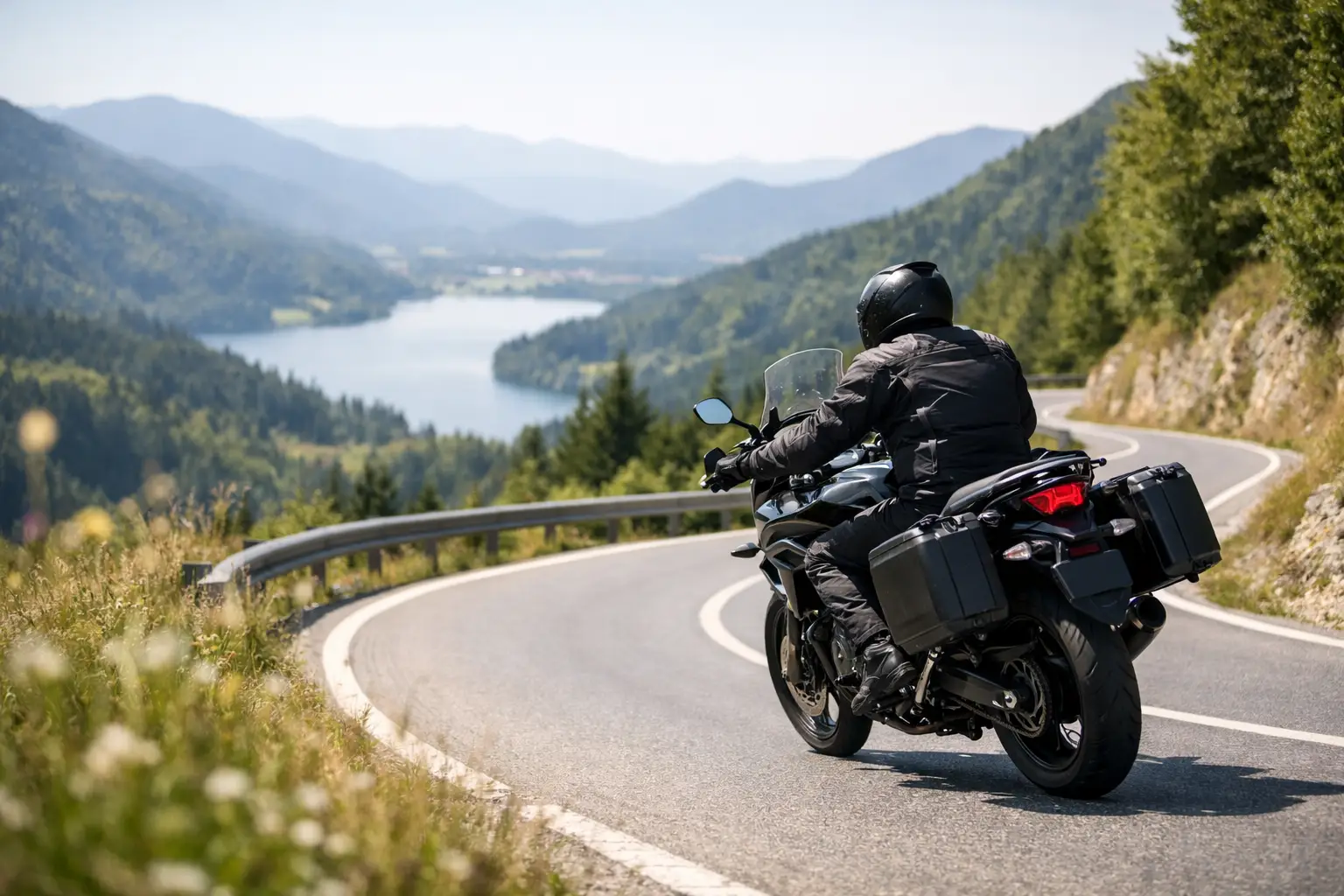
Plan beginner friendly motorcycle loops with calmer pavement, clear stops, smart pacing, and weather-aware tips for a confidence-building day ride today.
A good first ride is not the one that leaves you exhausted, lost, or white-knuckling every downhill corner. The best beginner friendly motorcycle loops give you enough scenery to feel like an adventure, enough curves to practice, and enough easy exits that you can shorten the day without turning it into a problem.
That last part matters more than many new riders expect. A loop looks simple on a map, but road surface, elevation, traffic, fog, heat, fuel stops, and the way a route returns you to familiar territory determine whether it feels relaxed or overwhelming. Build the right kind of loop and you will come home wanting another ride next weekend.
What Makes a Motorcycle Loop Beginner Friendly?
A beginner route does not need to be perfectly straight or completely free of curves. In fact, a gentle series of predictable bends is where riders develop smooth steering, throttle control, and vision through a corner. The goal is manageable repetition, not a technical challenge.
Look for paved two-lane roads with reliable lane markings, moderate speed limits, clear sightlines, and frequent places to stop. A 70-mile loop with a coffee stop, a scenic overlook, and a nearby gas station is often a better first-day ride than 180 miles of famous twisties. You want room to think, not a schedule that makes every stop feel like falling behind.
Traffic is the trade-off. A quiet mountain road can be great on a weekday and stressful on a sunny Saturday when fast cars, cyclists, and other motorcycles fill every blind corner. Coastal roads may be flat and beautiful, but morning fog and crosswinds can change the equation quickly. The route itself is only half the plan. Timing makes the other half.
Choose loops with simple navigation
For newer riders, navigation should support the ride rather than compete for attention. A loop with three or four major road changes is easier to manage than a maze of tiny backroads, even if the latter looks more interesting online.
Start and finish at the same fuel station, rental location, or hotel whenever possible. It eliminates the end-of-day question of how to get back through unfamiliar traffic when you are tired. It also gives fly-and-ride travelers a practical anchor for luggage, rental return times, and a quick pre-ride check.
Keep the pace honest
Map estimates are usually optimistic for a motorcycle day. They do not account for gear stops, photos, construction, a slow-moving RV, or the extra time a newer rider needs to settle into an unfamiliar road.
For a first loop, plan roughly two to three hours of moving time and leave at least another hour open for breaks. If your route has sustained curves, steep grades, or popular sightseeing stops, scale the distance down. There is no prize for riding past the part of the day you were meant to enjoy.
Four Beginner Friendly Motorcycle Loops to Use as Models
These are route patterns, not fixed prescriptions. Check current road conditions, closures, weather, and local advisories before rolling out. A road that is mellow in dry daylight can become a very different ride after rain, wind, or a temperature drop.
1. The Marin Headlands and Mount Tamalpais loop, California
From the San Francisco area, a daytime loop through Marin can give a newer rider a taste of Northern California without committing to a long Big Sur-style day. Start north of the Golden Gate, use calmer access roads around the headlands, then work toward Mill Valley and the lower Mount Tamalpais area before returning via a route that avoids making every mile a tight hillside corner.
The appeal is variety: bay views, redwoods, coastal air, and plenty of places to reset. The caution is traffic. Weekend mornings bring cyclists, tourists, and riders chasing the same scenery. Go early, avoid pushing into dense fog, and skip the more technical ridge sections if you are still getting comfortable with downhill turns and narrow lanes.
2. A Lake Tahoe shoreline loop, California and Nevada
A partial Lake Tahoe loop is a smart confidence-builder when the weather is stable. Rather than circling the entire lake, pick a 60- to 100-mile section, such as South Lake Tahoe to Emerald Bay and back, or an east-shore ride with a planned turnaround before the day gets long.
The pavement can be excellent and the views are distracting in the best possible way, so stop at designated overlooks rather than trying to take in the lake while cornering. Elevation is the real consideration here. Afternoon thunderstorms, cold mornings, and snow lingering near higher roads can affect a ride outside peak summer. Rental riders should also confirm whether their motorcycle and insurance terms allow travel across state lines.
3. The Hill Country river-road loop, Texas
The roads outside Fredericksburg, Kerrville, and Bandera can be ideal for riders who want rolling terrain rather than mountain exposure. Build a loop around river roads, small towns, and a lunch stop, keeping the mileage modest instead of trying to check off every famous ranch road in one day.
This region teaches useful real-world skills: changing pavement, sweepers, wildlife awareness, and sharing the road with trucks. Watch for loose gravel near driveways and cattle guards, especially after storms. Summer heat is also a bigger factor than the map suggests. Begin early, hydrate before you feel thirsty, and make fuel a habit rather than a last-minute search.
4. A Blue Ridge Parkway sampler, North Carolina or Virginia
The Blue Ridge Parkway is often recommended to newer riders because the posted pace is generally calmer, commercial traffic is limited, and overlooks create natural break points. The better approach is a sampler loop with a clear turnaround, not an ambitious all-day marathon along the ridge.
Pick an entrance near Asheville, Boone, Roanoke, or another overnight base, ride a manageable section, then return on a familiar route or a simple parallel road. Fog is common, especially in the morning and after rain. If visibility drops, do not treat it as a test of courage. Pull over safely, wait it out, or descend to lower ground.
Build Your First Loop Around a Bailout Plan
Every strong beginner route has a Plan B. Before departure, identify the point where you can turn around, the town where you can refuel, and the road that gets you back fastest if weather moves in. That is not overly cautious planning. It is what lets you ride with more freedom.
A good bailout plan is especially valuable on rentals. You may be adjusting to unfamiliar brakes, clutch feel, seat height, luggage, or rider-assist settings. Give yourself the first 20 minutes near town to get acquainted with the motorcycle before committing to a remote road.
When planning a loop, ask five practical questions:
-
Can I finish this ride before dark with breaks included?
-
Is there fuel before I reach a quarter tank?
-
What happens if rain, wind, or fog arrives?
-
Are there steep sections, unpaved connectors, or seasonal closures?
-
Can I make the route shorter without retracing a difficult road?
Those answers matter more than whether the route has a famous name.
Ride the Curves at Your Own Pace
On a confidence-building loop, the rider behind you is irrelevant. Enter corners at a speed that lets you look through the turn, keep your body relaxed, and roll on the throttle smoothly when you can see the exit. If someone wants to go faster, let them pass at a safe, obvious location. Do not speed up to prove that you belong on the road.
New riders also benefit from stopping before fatigue becomes obvious. Hands getting tight on the grips, missed shifts, frustration with navigation, and a wandering attention span are all signs to pull in, drink water, and take five minutes. A scenic overlook is more useful than a forced march to the next destination.
For groups, set the expectation before leaving: everyone rides their own ride, nobody is required to keep pace, and the next stop is known. That simple agreement prevents a lot of bad decisions in corners.
Let the Conditions Pick the Route
A route that is perfect on a clear 68-degree morning may not be the right choice when the forecast calls for gusts, intense heat, or afternoon rain. Use live weather as a routing tool, not just a packing checklist. If the coast is fogged in, head inland. If mountain temperatures are dropping, choose a lower-elevation loop. If thunderstorms are building, make the ride shorter and keep towns close.
This is where an AI-powered motorcycle planner such as CharterNow.ai can save real prep time: tell it your location, dates, experience level, bike style, and available hours, then shape the itinerary around realistic ride time and current conditions instead of piecing the day together from generic map pins.
The best beginner loop is not necessarily the longest, curviest, or most photographed route in the region. It is the one that leaves enough attention for the view, enough margin for the unexpected, and enough confidence to plan the next ride before you have even taken off your helmet.