
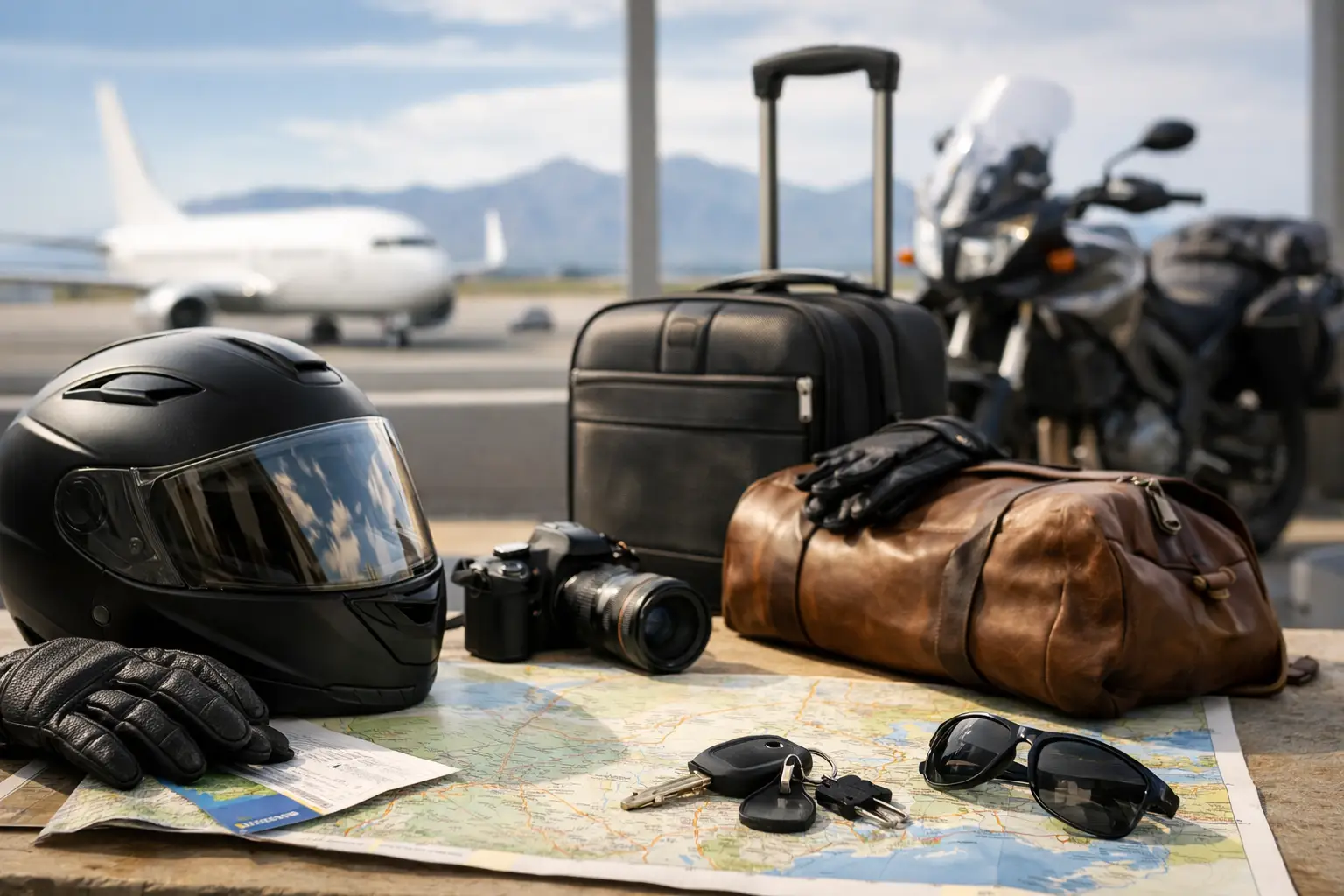
Plan a fly and ride motorcycle vacation with smarter rentals, realistic routes, weather checks, and packing advice for a great trip on two wheels, every mile.
A fly and ride motorcycle vacation starts with a simple trade: skip the cross-country freeway grind, land near the roads you actually want to ride, and spend your limited vacation days in the curves. It is one of the best ways to reach Big Sur, the Blue Ridge Parkway, the Smokies, the Colorado Rockies, or the desert Southwest without burning two days getting there and two more getting home.
The catch is that flying in does not make the planning disappear. It changes the details that matter. Your rental bike, pickup location, luggage limits, local weather, route pacing, and return timing all need to work together. Get those pieces right and you step off the plane ready to ride. Get them wrong and a dream trip becomes a rushed series of parking lots, interstate miles, and weather surprises.
Pick the destination before the motorcycle
Start with the riding experience, not the airport. A four-day coastal cruise has different needs than a week of high-elevation mountain passes or a desert adventure loop. The best destination is the one that matches the season, your available time, and the kind of riding you genuinely enjoy.
For a long weekend, choose an airport within 60 to 90 minutes of good roads and plan a tight region rather than trying to cross an entire state. Fly into San Francisco for redwoods and the coast, Las Vegas for desert scenery and Zion-adjacent routes, Denver for mountain riding, or Asheville for Appalachia. You want to be through the rental counter and pointed toward the first worthwhile road before the day disappears.
A five- to seven-day trip gives you room for a proper loop. That is where fly-and-ride travel shines. You can ride from Denver through the San Juans and back, build a Northern California route around the coast and Sierra foothills, or make a Smokies loop that includes Cherohala Skyway, the Blue Ridge Parkway, and quieter roads beyond the famous stops.
Be honest about your comfort level. A route packed with tight switchbacks, gravel, altitude, or heavy tourist traffic may be perfect for an experienced rider and exhausting for someone returning to motorcycles after a break. A good vacation route leaves room to stop, eat, take photos, and change course when the weather calls for it.
Book the right rental for your fly and ride motorcycle vacation
Rental choice is more than picking the bike that looks best in a photo. You need a motorcycle that fits your body, luggage plan, passenger situation, and the roads ahead. A low cruiser can be a relaxed choice for a California coast run. A sport-touring bike often makes more sense for long days, changing temperatures, and mountain passes. An adventure bike is useful when the plan includes forest roads or unpaved overlooks, but it is not automatically the best option for every scenic vacation.
Before reserving, check the practical terms: minimum age, license requirements, insurance options, deposit amount, mileage policy, roadside assistance, and what happens if weather disrupts your pickup. International visitors should confirm whether their home motorcycle license is accepted and whether an International Driving Permit is recommended or required in the state where they are renting.
Also ask what comes with the bike. Luggage, a phone mount, helmet, rain gear, and navigation can change both the cost and the convenience of the trip. If you are bringing your own helmet, make sure it is easy to carry through the airport and meets local requirements. A compact helmet bag or a carry-on-friendly modular helmet setup can make travel day less awkward.
Do not schedule a late-afternoon flight and expect to launch into a 250-mile first day. Rental pickup takes time: paperwork, a walkaround, adjusting controls, pairing navigation, and getting familiar with a motorcycle that is not yours. Plan the first night close to the pickup point or make day one a short, easy ride.
Fit and familiarity matter more than horsepower
Vacation is not the time to discover that a tall adventure bike feels intimidating when fully loaded, or that an aggressive sport bike puts too much weight on your wrists after two hours. Choose a machine you can confidently maneuver at gas stations, hotel lots, and scenic pullouts. If you normally ride a midweight standard at home, moving to a similar-size touring or standard rental is usually a smarter bet than jumping to the largest bike in the fleet.
Take 15 minutes before departure to set mirrors, learn the fuel range, find the turn signals, test the brakes, and understand the luggage locks. A rental bike may be well maintained and still have controls that feel slightly different from your own.
Build a route around real riding time
Map mileage lies to motorcyclists. A 180-mile day on a straight interstate can be easy. The same distance on a coastal highway, through a national park, or over a series of mountain passes can consume most of the day. Add fuel stops, construction, traffic, photography, meals, and the occasional wrong turn, and a route that looked casual on a map can become a push.
For most vacation riding, 150 to 220 scenic miles is a satisfying full day. On technical roads or in areas with frequent stops, 120 to 160 miles may be plenty. The point is not to maximize mileage. It is to arrive before dark with enough energy to enjoy dinner and be ready to ride again tomorrow.
Build each day around one or two anchor roads, then connect them with sensible pavement. For example, a San Francisco-to-Big Sur day might center on the coastal views, with an inland alternative ready if fog, closures, or traffic make Highway 1 a poor choice. In the Rockies, a pass may be the highlight, but the route should also account for afternoon storms and temperatures that can drop fast at elevation.
CharterNow.ai can help turn those variables into a usable trip plan, pairing rider-specific routes with estimated ride times, live weather context, navigation, and nearby rental options. Tell it your destination, dates, experience level, preferred motorcycle style, and how hard you want to ride. The result should feel like a local rider helped you sketch the day, not like a generic driving route was pasted onto a motorcycle trip.
Treat weather as part of the route
On a fly-and-ride trip, you cannot rely on a garage full of backup gear. Pack for conditions you are likely to see, then build flexibility into the itinerary. Coastal California can be cool and foggy in the morning before warming inland. Desert destinations can be comfortable at sunrise and punishing by midafternoon. Mountain weather can swing from sunshine to cold rain in a single pass.
Bring a packable waterproof layer even when the forecast looks perfect. Layering beats one heavy jacket for most multi-region trips: a moisture-wicking base layer, a warm midlayer, and a protective outer layer give you more options without eating all your luggage space. Waterproof gloves or over-gloves are worth their small footprint.
Check conditions each morning, but also look at the weather along the full route and at elevation. Rain at the hotel may mean snow or ice on a high pass. Heat in town may mean a comfortable ride at 8,000 feet. Wind deserves the same attention, especially in desert basins and exposed coastal sections.
Have a Plan B that is still worth riding. If a mountain route is stormed out, swap it for a lower-elevation valley loop. If a scenic coastal road closes, choose an inland route with good pavement, fuel, and places to stop. Flexibility is not settling. It is how experienced travelers protect a great riding day.
Pack light, but pack like a rider
The easiest way to ruin the handling of an unfamiliar rental is to overload it. Bring versatile riding gear, a few casual layers, and a small set of trip essentials. Most hotels can handle laundry. You do not need seven separate outfits for a seven-day ride.
Keep the items you may need during the day accessible: water, sunscreen, earplugs, a charging cable, sunglasses, identification, rental documents, a compact first-aid kit, and any medication. Put a microfiber cloth somewhere handy for wiping a wet visor or cleaning bugs off a shield. If the rental has hard cases, keep heavier items low and evenly distributed.
For international travelers, remember that US distances can be bigger than they appear, and service can be sparse outside major cities. Fill up when the opportunity is good, especially in desert, mountain, and rural areas. Do not assume every small town has fuel available late at night.
Leave margin on the final day
The last day is where otherwise solid motorcycle vacations get stressful. Do not plan a remote, all-day route before an evening international flight. Rental returns may require fuel, paperwork, damage inspection, a shuttle, and airport time. A minor delay, road closure, or thunderstorm can turn that schedule into a problem quickly.
Keep your final ride short, return the motorcycle with a comfortable time buffer, and stay near the airport the night before if your flight leaves early. It may not be the most romantic part of the itinerary, but it protects every great mile that came before it.
A well-planned fly-and-ride trip gives you something a long ride from home cannot always offer: access to a completely different riding world without spending your vacation trying to reach it. Pick roads that fit your skill and schedule, rent a bike you will enjoy all day, and leave enough room for the unexpected. The road is waiting. Are you ready?