
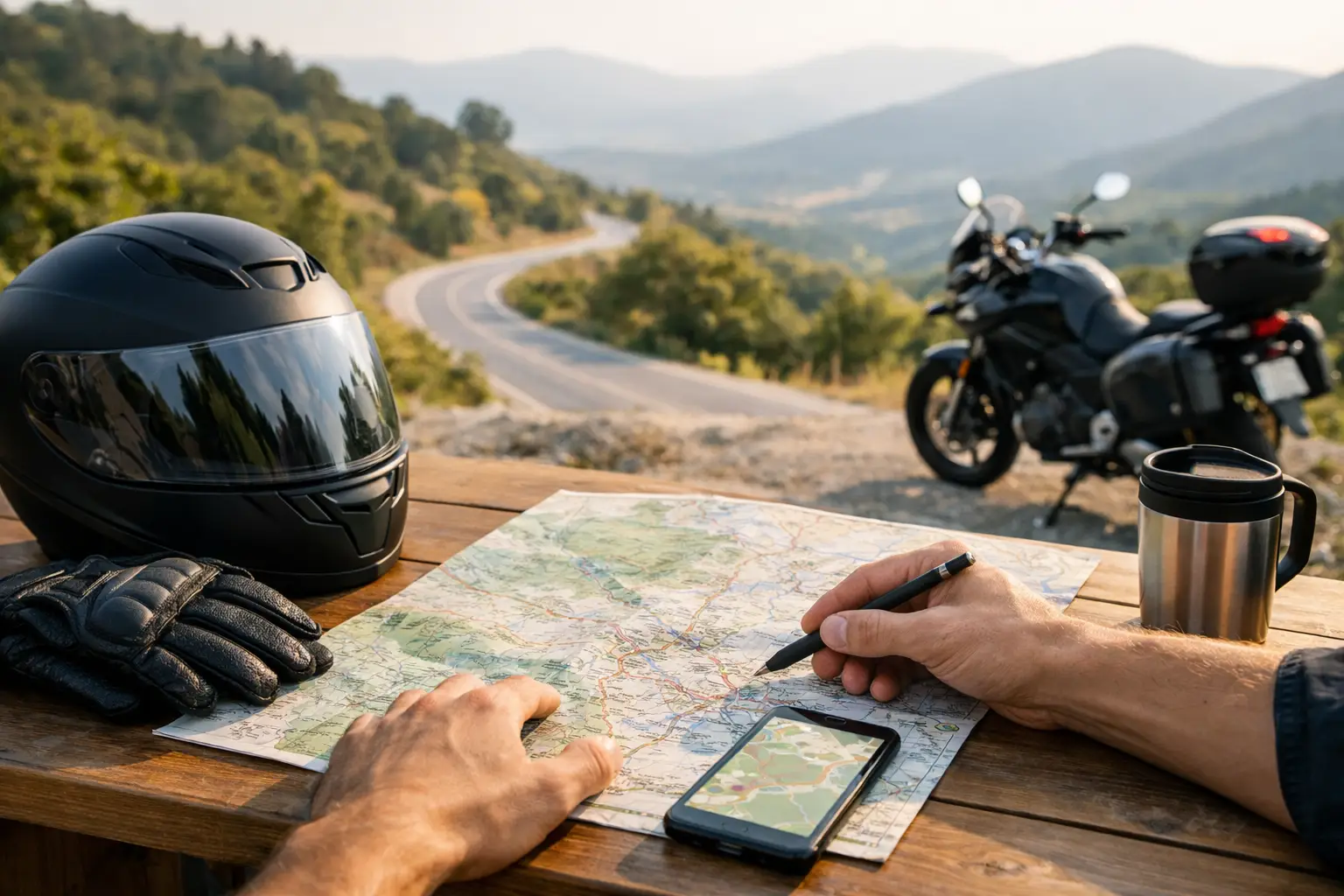
Learn how to plan a perfect motorcycle ride with routes, weather checks, fuel stops, rental tips, and pacing that matches your skills and time on the road.
A great ride rarely falls apart because the road was not scenic enough. It falls apart when a “quick loop” turns into six hours after dark, the mountain pass is 20 degrees colder than expected, or the next fuel stop is farther than the tank’s real-world range. To plan a perfect motorcycle ride, start with the ride you can actually enjoy - not the biggest route you can fit onto a map.
The perfect ride looks different for every rider. A newer rider may want a relaxed 120-mile coastal loop with easy fuel stops and daylight to spare. An experienced sport rider may be chasing clean pavement, elevation changes, and a few hours of technical twisties. A fly-and-ride traveler may need a rental pickup, luggage-friendly roads, and a hotel before the weather moves in. The route should serve the rider, not the other way around.
Start with your real riding window
Before picking roads, decide how much time you have from kickstand up to kickstand down. Be honest about the whole day, not just moving time. A four-hour ride can easily become six when you add coffee, fuel, photos, construction delays, overlooks, lunch, and the occasional wrong turn.
For a day ride, plan around a comfortable pace rather than an aggressive mileage target. On open interstate, 250 miles may be manageable. On a road packed with switchbacks, small towns, and scenic stops, 150 miles can feel like a full day. Mountain roads and coastal routes often take longer than navigation estimates suggest, especially on a weekend.
Leave a daylight buffer. Arriving at a familiar hotel after sunset is one thing; finding a remote campground or navigating an unfamiliar mountain road in the dark is another. If the ride is meant to feel free, do not schedule it so tightly that every stop feels like lost time.
Choose roads for the motorcycle and the rider
The best route is not automatically the curviest one. Match road character to your skill level, passenger, bike, and goal for the day.
A relaxed cruiser ride shines on scenic byways, vineyard roads, desert highways, and coastal stretches with frequent pullouts. A sport bike can make the most of a compact loop with consistent corners and good sightlines. An adventure bike opens up forest service roads and graded backcountry routes, but those routes demand more weather awareness, a realistic assessment of surface conditions, and a backup plan.
For newer riders, look for roads with predictable pavement, moderate curves, low traffic stress, and regular services. A route can still be memorable without hairpins, narrow lanes, or a remote pass where a simple mechanical issue becomes a long wait. Experienced riders can add technical sections, but should still consider pavement quality, blind corners, local traffic, and enforcement zones.
A useful rule: build the ride around one or two signature roads, then connect them with sensible pavement. Trying to hit every famous road in a region usually creates more transit than riding pleasure.
Build a route with natural stops
Fuel, food, water, and rest stops are part of the route design. They are not an afterthought.
Check your bike’s realistic fuel range, not the number on the spec sheet. Headwinds, elevation, luggage, passenger weight, loose surfaces, and enthusiastic throttle use can shrink it fast. On remote routes, plan to refuel well before the warning light. If a station is closed or its pumps are down, you want options.
Stops also protect your focus. On hot California inland rides, a water stop can matter more than a photo stop. At higher elevations, a warm drink and an extra layer can reset a cold rider before fatigue sets in. For a group ride, use clear meet-up points instead of expecting everyone to stay glued together through traffic and curves.
When you are planning a multi-day trip, choose overnight stops that support the next morning’s route. A town with fuel, food, secure parking, and a couple of lodging choices is usually better than a remote destination that forces a long detour before breakfast.
Check weather by elevation, not just by city
A forecast for Los Angeles, San Francisco, or Denver tells you very little about the road conditions 5,000 feet higher. A route can begin in warm sunshine, cross fog along the coast, climb into cold wind, and finish in afternoon heat - all before dinner.
Look at the forecast along the entire route and at the elevations you will ride. Watch for wind on exposed ridges and desert highways, fog on coastal roads, thunderstorms in the mountains, and temperature drops after sunset. Rain matters, but so does what comes after it: wet leaves in shaded corners, gravel washed onto canyon roads, and reduced visibility on a pass.
Weather should change your route when it needs to. That is not backing out of the adventure. It is good judgment. A lower-elevation loop, an earlier start, or a shorter day can turn a questionable ride into a great one.
Prep the bike for the trip you are taking
A motorcycle that is perfect for a Saturday coffee run may need a little attention before a 500-mile weekend. Check tire condition and pressure when the tires are cold, then inspect the chain or belt, oil level, lights, brakes, and coolant if applicable. Carry the key tools you know how to use, along with a tire repair option and a way to inflate the tire.
Pack for conditions, not optimism. A ventilated jacket feels great at noon but may be miserable on a foggy coast or high-elevation descent. Layers, waterproof gloves or over-gloves, a neck gaiter, earplugs, and a compact rain layer take up little room and can save a ride.
For rental riders, spend a few minutes getting familiar with the bike before leaving the lot. Adjust mirrors and controls, understand the fuel type and tank range, check luggage capacity, and ask about roadside assistance. A big touring bike, an unfamiliar clutch, or a loaded adventure bike deserves a few calm miles before you point it toward the twisties.
Keep navigation useful, not distracting
Turn-by-turn navigation is valuable, but it should not become another thing fighting for your attention. Mount your phone or GPS where you can glance at it without taking your eyes off the road for long. Download maps for areas with weak cell service and keep a charging plan in place.
More importantly, know the route’s shape before you leave. Identify major towns, fuel points, the day’s key road, and one alternate way home. If navigation fails, you should still know whether to head north toward the coast, east to the interstate, or back toward the last fuel stop.
This is where a motorcycle-specific planning tool earns its keep. CharterNow.ai can build an AI-powered route around your dates, experience level, preferred bike style, ride duration, and riding goals, then factor in live weather, estimated ride time, scenic highlights, navigation, and nearby rental options. It cuts down the tab-switching, but you still make the final call when conditions change.
Plan a perfect motorcycle ride with a backup route
The strongest route plans have a little flexibility built in. Keep a shorter version of the loop in mind, especially if weather, traffic, fatigue, or a late start changes the day. On a coastal ride, that might mean turning inland before the fog gets heavy. In the mountains, it may mean skipping the highest pass and riding a lower canyon road instead.
A backup plan also makes group rides smoother. Not everyone has the same comfort level, fuel range, or appetite for endless corners. Agree on the basic route, the regroup points, and the conditions that would trigger a change. The goal is not to prove that you can complete the original plan. The goal is to get everyone home with the kind of tired smile that makes them want to do it again.
The road is waiting. Give yourself enough time to notice it.