
Plan a motorcycle route based on skill level with practical road tips for new, returning, and experienced riders, plus weather and rental considerations.
That gorgeous mountain road can turn into a long, tense afternoon when its switchbacks arrive just as the pavement narrows, the temperature drops, and a loaded touring bike starts feeling bigger than expected. The best motorcycle route based on skill level is not the one with the most curves or the biggest views. It is the route that lets you ride within your margin, enjoy the scenery, and get back with enough energy to want another day in the saddle.
Route difficulty is more than a label. A road can be easy in dry daylight and demanding in coastal fog, rain, crosswinds, or holiday traffic. The same is true of the motorcycle beneath you: a familiar middleweight standard and an unfamiliar rental bagger create two very different riding days. Match the route to the rider, the bike, the conditions, and the time available.
What Makes a Motorcycle Route Difficult?
Mileage gets too much attention. A 180-mile freeway run may be physically easy but dull. A 90-mile loop through tight mountain corners can be a serious workout, especially if it includes elevation changes, rough pavement, blind turns, and limited fuel stops.
Look at the full riding picture before committing to a road. Corner radius and frequency matter because nonstop technical turns demand more focus than a few scenic sweepers. Road surface matters because gravel, patched pavement, tar snakes, wet leaves, and broken asphalt reduce available traction. Elevation and weather matter because a sunny valley can lead to cold fog or rain at a mountain pass.
Traffic changes the equation, too. A route that is relaxed on a Tuesday morning may become frustrating behind RVs on a summer weekend. For travelers and renters, unfamiliar traffic patterns, jet lag, and a bike you picked up an hour ago should also lower the difficulty level you choose.
Choosing a Motorcycle Route Based on Skill Level
Skill is not a permanent badge. A rider can be highly capable on a favorite naked bike at home and still be a beginner for a first ride in rain, on an adventure bike, or on an unfamiliar California mountain road. Honest route selection is smart riding, not playing it safe for its own sake.
Newer riders: build confidence with room to breathe
New riders do best on paved routes with predictable curves, broad lanes, reliable cell service, and easy places to pull over. Think scenic river roads, farmland loops, gentle coastal stretches, or state highways with long sight lines. The goal is repetition without overload: smooth braking, clean corner entry, steady throttle, and looking through the turn.
Keep the first few rides shorter than you think. A 60- to 100-mile loop with a planned coffee or lunch stop is usually plenty. Avoid routes that combine steep grades, hairpins, heavy tourist traffic, and late-day riding. Those elements can be fun later, but stacking them all at once leaves little attention for the basics.
A practical example is a daytime coastal ride that uses a main highway instead of the smallest road shown on the map. You still get ocean air and overlooks, but you have wider pavement, more fuel options, and a simpler exit if fog rolls in. Pick a turnaround point before leaving, not after fatigue has already set in.
Returning riders: prioritize familiar controls and manageable pace
Riders coming back after a long break often have road awareness and good instincts, but timing can take a few rides to return. Choose a route similar to a newer rider's plan at first, then add variety gradually. A 120-mile paved loop with moderate sweepers is a better reset than chasing a famous technical pass on day one.
Pay special attention to low-speed situations. Scenic towns, gas stations on a slope, packed trailhead lots, and U-turns at viewpoints can challenge a returning rider more than open-road cornering. Build in uncrowded stops and leave time to practice getting comfortable with the bike's clutch, brakes, weight, and turning radius.
If you are renting, take a few minutes in a quiet lot before heading into traffic. Adjust mirrors, learn where the turn signals and hazard lights are, and feel the front brake response. That small reset makes the route safer and more enjoyable.
Intermediate riders: add curves, not pressure
Intermediate riders can enjoy mountain roads, canyon sweepers, and longer day rides, but the best step up is controlled complexity. Add sustained curves or a moderate elevation change, not a route that forces you to ride hard all day. A 150-mile ride with a mix of flowing back roads, a scenic overlook, and one technical section is a good format.
This is where route pacing becomes critical. Do not treat a twisty road like a race stage. Enter at a speed that lets you stop within the distance you can see, especially around blind corners. Watch for decreasing-radius turns, driveways, wildlife, sand near pullouts, and cars crossing the centerline.
Intermediate riders should also leave more weather margin than they think they need. Afternoon thunderstorms can turn mountain pavement slick quickly. Coastal fog can hide damp patches beneath shaded trees. If conditions change, shorten the loop without treating it as a failed ride. Good judgment is part of progressing.
Experienced riders: seek quality, not just technical difficulty
Experienced riders can handle demanding roads, but experience does not erase risk. Technical routes reward preparation: tire condition, fuel range, daylight, bailout options, and a realistic pace for the group all matter. A full day of tight twisties can fatigue even a strong rider, particularly on a heavy touring bike or a hot summer afternoon.
For advanced rides, combine the road's character with a clear purpose. Maybe it is a high-elevation pass early in the day, a quiet lunch stop, then a smoother return route before temperatures fall. Maybe it is an adventure loop with graded dirt roads, but only after checking recent rain and choosing a bike with appropriate tires. The best challenge has a plan behind it.
Experienced group riders should avoid setting the pace for everyone else. Agree on regroup points, keep enough space for each rider to choose a comfortable line, and never make a less experienced rider feel forced to keep up. A route is only as good as the whole group can enjoy it.
Adjust the Route for the Motorcycle You Are Riding
A route that suits your skill level can still be wrong for the motorcycle. Lightweight standards and smaller displacement bikes are often excellent on tight paved roads because they are easy to place and recover at low speeds. Large cruisers and fully loaded touring bikes are comfortable on long days, but tight switchbacks, loose pullouts, and steep parking areas require more effort.
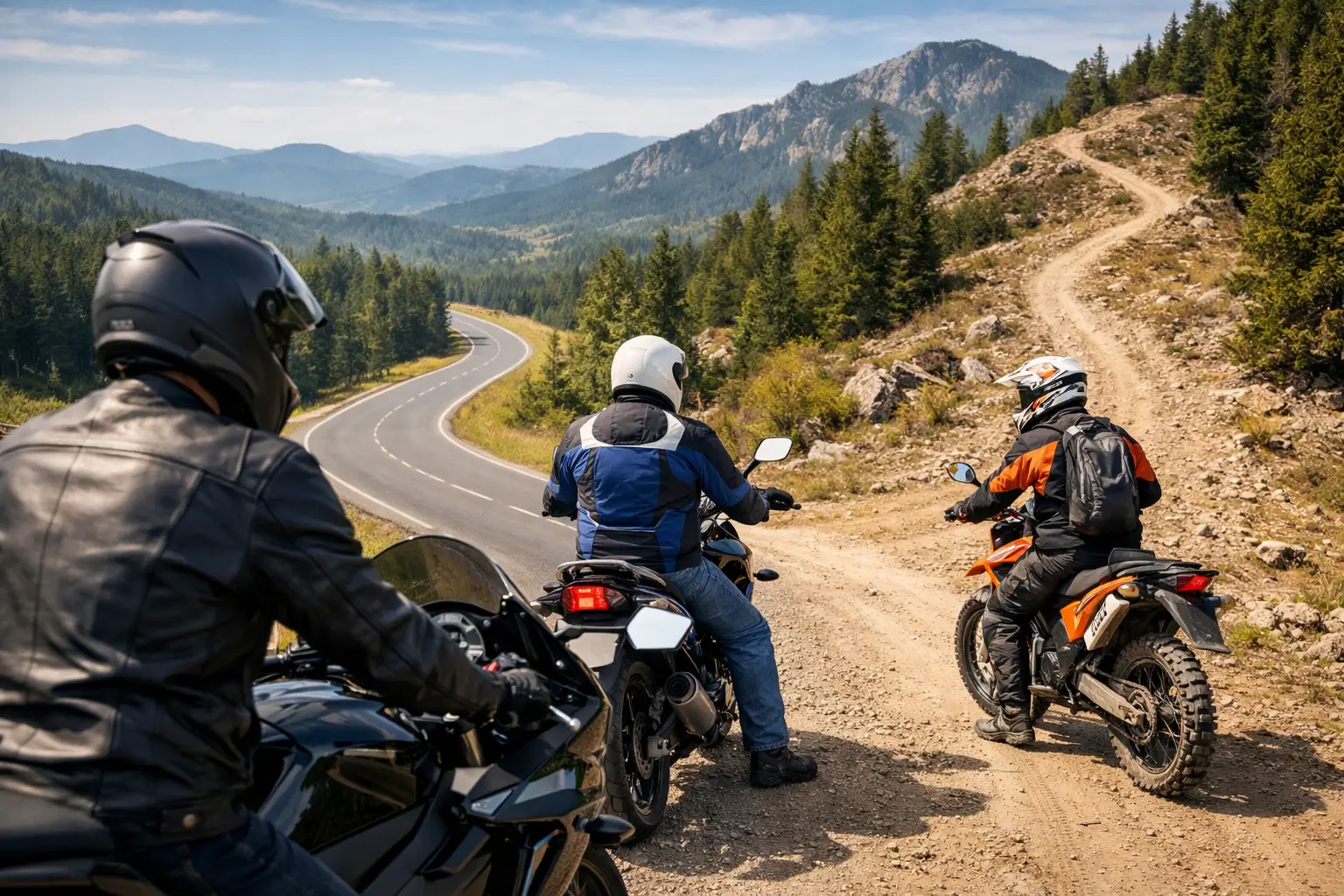
Adventure bikes open up forest roads and remote viewpoints, yet ground clearance does not make every unpaved road easy. Deep gravel, ruts, sand, and water crossings can raise the difficulty fast. If you are new to off-pavement riding, choose a maintained, dry gravel road with an easy turnaround before committing to a remote backcountry route.
Rental riders should be especially conservative. Choose a motorcycle you can confidently manage at a stop, then plan the first day around paved, accessible roads. Save the technical route for after you know how the bike feels under braking, in slow turns, and with luggage.
Plan for Conditions, Not Just the Map
A map does not show cold wind at a ridgeline, deer near dusk, or a road crew spreading gravel after winter repairs. Before departure, check live weather across the entire route, not only at your hotel or starting point. Look at temperatures by elevation, wind direction, precipitation timing, and daylight at your final destination.
Build a route with options. Know where you can turn around, where fuel is available, and which main road gets you home if conditions deteriorate. On popular scenic roads, start early enough to enjoy the pavement before traffic builds. On remote roads, carry more water than a short ride seems to require and do not assume fuel stations keep late hours.
CharterNow.ai can help turn those variables into a rider-specific plan, factoring in your destination, available time, motorcycle style, preferred intensity, and live weather instead of handing you a generic scenic line on a map.
A Better Way to Measure a Successful Ride
The right route should leave you alert enough to notice the final overlook, not so drained that the last 20 miles become a chore. If you finish wishing you had taken one more curve, that is usually a better sign than finishing proud you survived a road beyond your comfort zone.
Start with a route that feels slightly easier than your maximum ability, then adjust after a few miles. The road is waiting. Choose the version of it that lets you ride well, ride relaxed, and enjoy the miles that matter.