
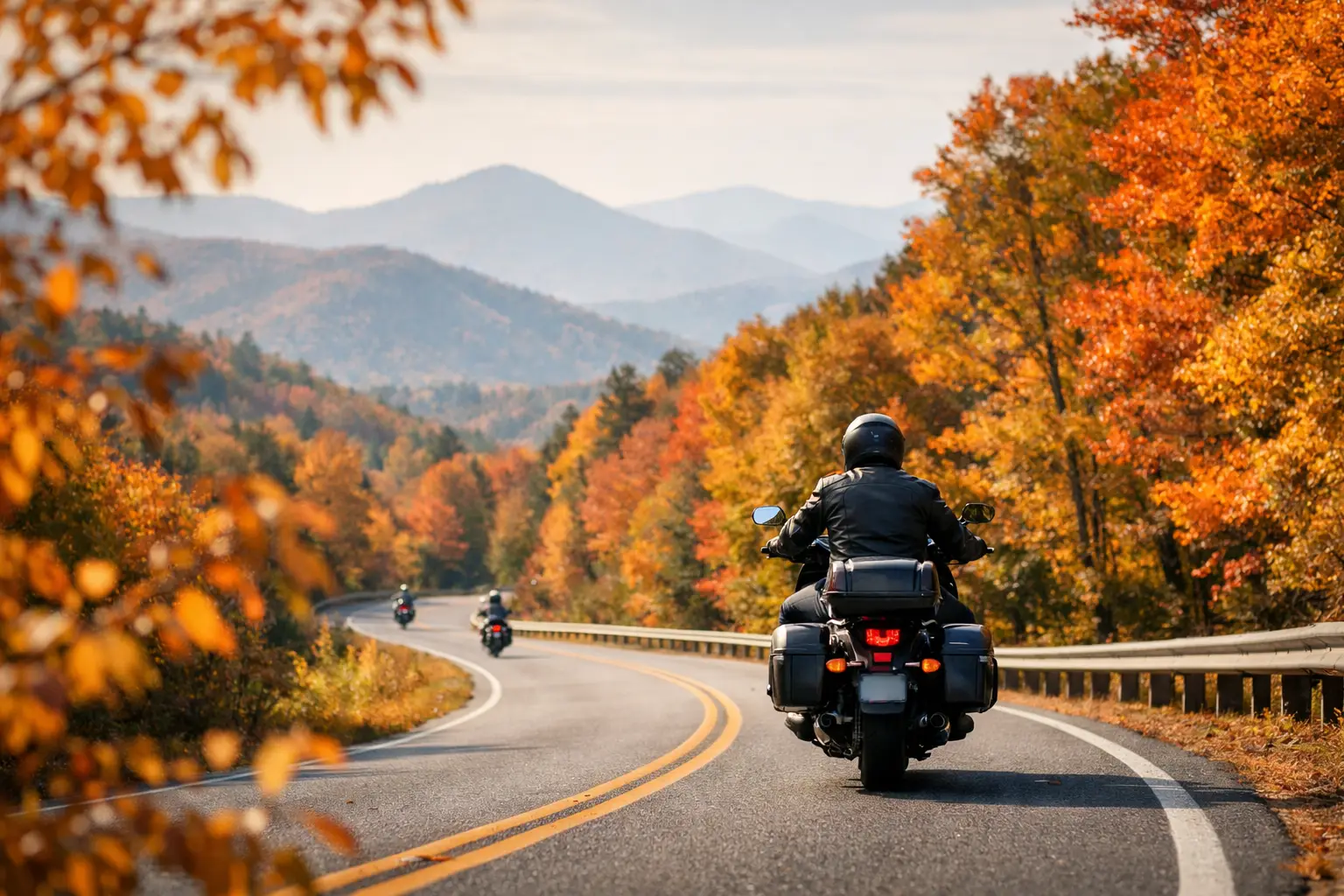
Plan the best motorcycle routes for fall with peak-color timing, road notes, weather checks, and practical advice for riders across America this fall.
The best motorcycle routes for fall are not always the ones with the loudest leaf-peeping reputation. The right ride puts color, curves, temperature, daylight, and your own riding comfort in the same plan. A bluebird October afternoon can make a familiar road feel brand-new. A cold front, wet leaves in shaded corners, or an early sunset can turn an ambitious route into work.
Fall is also a sweet spot for fly-and-ride trips. Summer crowds thin out, rental availability often improves, and many of the country’s best roads trade heat haze for crisp air. Pick your region carefully, leave a little margin in the schedule, and you can build a day that feels made for two wheels.
7 Best Motorcycle Routes for Fall
1. Blue Ridge Parkway, Virginia and North Carolina
If your idea of a fall ride is long ridgelines and one overlook after another, the Blue Ridge Parkway belongs near the top of the list. The road rolls from Virginia’s Shenandoah region through North Carolina’s high country, with low speed limits that encourage a relaxed, scenic pace rather than an all-day charge.
For a strong day ride, work around Asheville and the Pisgah National Forest, then connect sections of the Parkway with nearby mountain roads. Early to mid-October is often prime at the highest elevations, while lower elevations can hold color later into the month. Timing shifts every year, so check the forecast rather than booking around a fixed “peak week.”
The trade-off is visibility and temperature. Fog can sit on the ridges after a cool night, and tunnels stay damp longer than open pavement. Start later if the morning is socked in, carry a warm layer, and do not expect fast progress. This is a road for stopping.
2. Vermont Route 100 and the Green Mountains
Route 100 is one of those rare roads that works for almost every rider. It runs through classic Vermont towns, follows rivers and valleys, and offers easy access to mountain detours without demanding expert-level cornering. Pair it with routes around Stowe, Waitsfield, Woodstock, or the Mad River Valley for a flexible weekend loop.
Late September through mid-October is usually the window, with northern and higher sections changing first. Weekdays are dramatically better if you want fewer cars, cleaner photo stops, and more room to settle into a rhythm.
Newer riders should stay on the main paved roads and build in plenty of daylight. More experienced riders can add the smaller paved passes, but should treat leaf cover as a real traction issue, especially after rain. Vermont’s color is the attraction, but wet maple leaves can hide broken pavement and tighten an otherwise easy corner.
3. California Highway 1 from Monterey to Big Sur
California does fall differently. You will not get New England’s wall-to-wall red maples, but the Monterey-to-Big Sur stretch delivers something just as memorable: clear coastal light, fewer summer visitors, and cool air coming off the Pacific. For many riders, October is one of the best months to ride Highway 1.
A practical route starts in Monterey or Carmel, runs south through Garrapata and Big Sur, then turns around wherever current road conditions require. Highway 1 closures are part of the reality here, especially after heavy weather, so never assume a map route is rideable end to end. Make the coast the main event rather than chasing mileage.
Morning fog can be thick near the water while inland temperatures climb quickly. Bring a windproof layer and avoid packing your schedule too tightly. If you are renting in the Bay Area, this route makes an excellent full-day escape, but it is much better with an early start and a fuel plan.
4. The Ozarks: Arkansas Highway 7 and the Pig Trail
Arkansas is an underrated fall motorcycle destination because it gives you real curves without the packed scenic-road traffic found in more famous mountain regions. Highway 7, particularly north of Russellville, is a reliable backbone route. Add Arkansas Highway 23, known as the Pig Trail, for tighter bends and a more technical feel.
Color typically builds from mid-October into early November, depending on elevation and weather. The best strategy is to base near Jasper, Eureka Springs, or Mountain View and choose a loop that suits the day’s conditions. The roads are fun, but they are not a place to ride beyond your sightlines. Gravel from driveways, deer, and shaded damp sections are common in the hills.
This is a good choice for riders who want a twistier fall trip without the pace of a major touring corridor. If a passenger is along, keep Highway 7 as the core route. If you are comfortable with tighter, blind corners, add the Pig Trail when the pavement is dry.
5. Utah Scenic Byway 12
Utah’s Scenic Byway 12 is a fall ride for riders who prefer sandstone to foliage. The route links Bryce Canyon country with Capitol Reef country, crossing high plateaus, slickrock terrain, and the narrow ridge known as Hogsback. In October, the desert heat eases, cottonwoods bring flashes of yellow, and the landscape feels bigger with every mile.
The key is accepting the temperature swing. A morning near Boulder Mountain can be cold enough for insulated gloves, while lower elevations may be comfortably warm by afternoon. Snow can arrive early at higher points, and high winds can make exposed sections less enjoyable on a light bike.
Plan fuel and food stops before leaving town. This is not an urban ride with services every few miles. It is ideal for a confident rider on a touring bike, standard, or adventure bike, though the route itself is paved. Give it a full day, or better yet, make it part of a two-night southern Utah trip.
6. Great Smoky Mountains: Foothills Parkway and Cherohala Skyway
The Great Smoky Mountains can be crowded in fall, but there is a smarter way to ride them. Use the Foothills Parkway for broad views and a calmer warm-up, then ride the Cherohala Skyway for a higher-elevation sweep through Tennessee and North Carolina. Together, they deliver the mountain scale people come for without making every mile feel like a parade route.
Mid-October is popular for good reason, but late October can still be excellent at lower elevations. Ride early on weekdays, stay patient around pullouts, and let faster local traffic go by. The Cherohala climbs high enough to feel noticeably colder than the towns at either end, so pack for the mountain rather than the hotel parking lot.
Avoid treating this area as a race to add Deals Gap to every itinerary. The Tail of the Dragon can be fun, but it may not be the best fit for a rider seeking a relaxed fall day, a rental bike, or a passenger-friendly route. The Skyway offers more breathing room and better opportunities to enjoy the scenery.
7. Texas Hill Country: The Three Sisters
When northern routes are losing leaves and gaining frost, Texas Hill Country is often just getting comfortable. The Three Sisters loop near Leakey, Medina, and Camp Wood combines Ranch Roads 335, 336, and 337 into a ride full of elevation changes, limestone canyons, and quick, engaging turns.
Late October through November is the strongest window. You may catch some color along creeks, but this ride is more about open ranch country, clean pavement, and reliable riding weather. It also works well for a long weekend when you want twisties without cold-weather layers dominating the experience.
The roads deserve respect. Some corners tighten unexpectedly, cell service can be limited, and wildlife is active near dusk. Fill up before the loop, carry water, and skip the temptation to ride every section at maximum pace. Hill Country rewards smooth riding more than aggressive riding.
Build the Route Around the Day You Actually Have
A fall route is only as good as its timing. A 220-mile loop that looks perfect online may leave no room for fog, a slow lunch stop, construction, or the simple urge to pull over at a viewpoint. In autumn, shorter routes often produce better rides because daylight disappears earlier and weather changes faster.
Build a route with a primary plan and one easy cutback option. For a new rider, that may mean a 120-mile scenic loop with fuel every hour or so. For an experienced touring rider, it may mean 250 miles with a mountain pass that can be removed if rain moves in. Tell CharterNow.ai your dates, destination, bike style, experience level, and preferred pace, and it can shape a route around live weather and realistic ride times instead of a generic scenic-road list.
Before rolling out, check for parkway closures, wildfire impacts, road construction, and overnight temperatures at the route’s highest point. Bring a clear visor for early darkness, a warm midlayer, and enough time to stop riding before deer become the main traffic. Pick the route that matches the day, not just the photo. Fall has a short season, but when the pavement is dry and the air is sharp, there is no better reason to get on the road.