
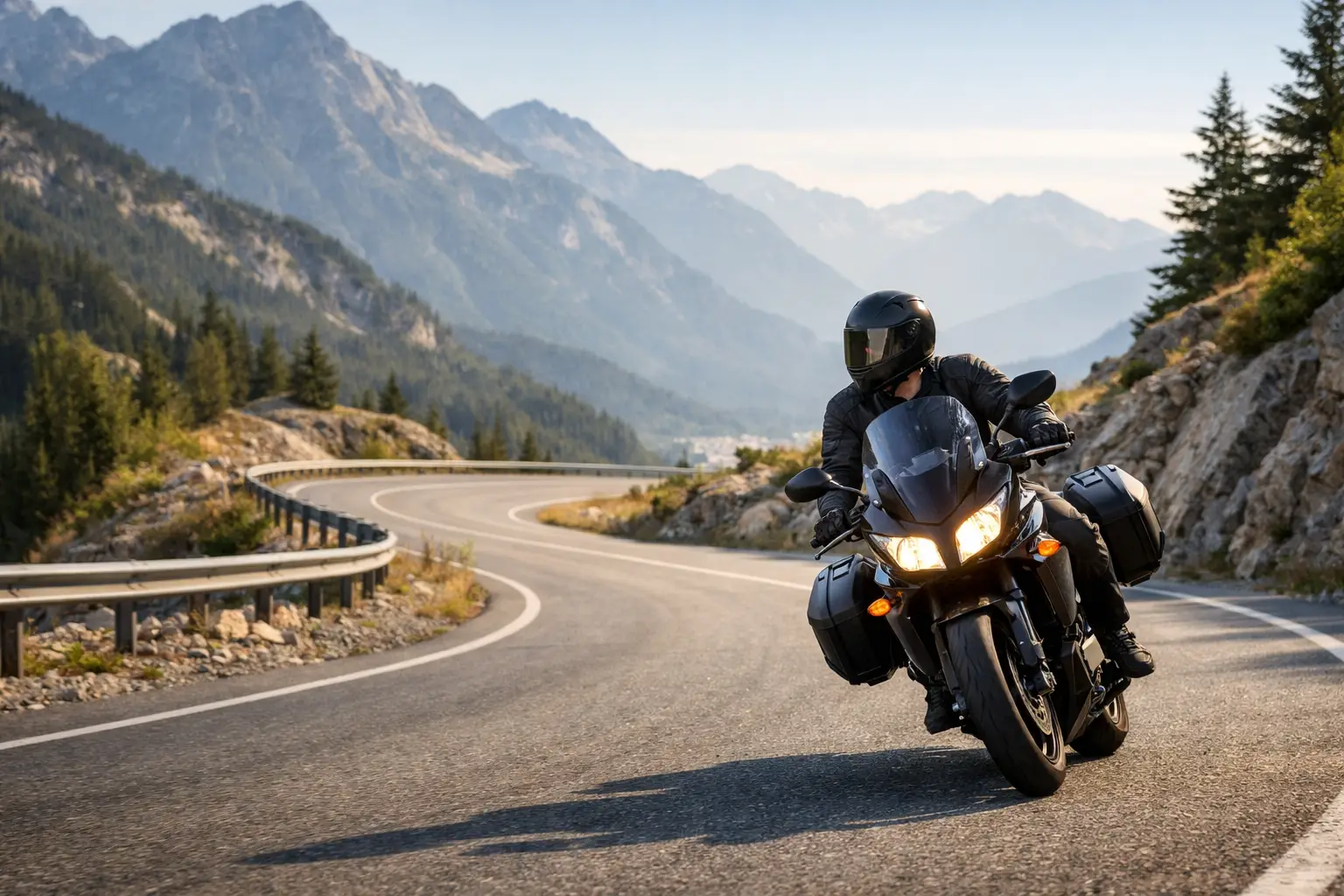
Can beginners ride mountain roads safely? Learn how to choose forgiving routes, read curves and weather, and build confidence one calm ride at a time.
A mountain road can turn a basic Saturday ride into the one you remember all year: pine scent in your helmet, cool air at the summit, and a string of curves that finally starts to flow. But can beginners ride mountain roads? Absolutely - if the road, weather, motorcycle, and pace match the rider. The mistake is treating every road with an elevation line on a map as the same kind of challenge.
A mellow paved route through the foothills is a very different ride from a tight, cliffside pass with decreasing-radius corners, blind driveways, and afternoon thunderstorms. New riders do not need to avoid the mountains. They need to build up to them deliberately.
Can Beginners Ride Mountain Roads Safely?
Yes, with a route that gives you room to learn rather than demands perfection. Mountain riding adds variables that flatter, straighter roads tend to hide: changing pavement, sharper curves, elevation-related weather swings, slow-moving traffic, wildlife, and fewer places to turn around or take a break.
The goal for a first mountain ride is not to prove you can keep up with faster friends. It is to finish feeling calm enough to want another one. That means choosing paved roads with clear lane markings, predictable corners, good sightlines, and regular fuel or town stops. A scenic state highway or well-maintained forest approach road is usually a better opening move than the famous twisty route everyone posts online.
If you are renting a motorcycle on vacation, be even more conservative. You may be adjusting to an unfamiliar bike, different traffic patterns, and a route you have never seen. Pick a manageable daytime loop, leave a time buffer, and avoid making your first mountain day your longest day.
Start With the Right Kind of Road
Maps can make mountain roads look equally inviting. They are not. Before you commit, look beyond mileage and focus on what the road asks of you.
A beginner-friendly mountain route usually has a moderate speed limit, pavement rather than gravel, passing lanes or pullouts, and towns or services along the way. It might still have plenty of curves, but the turns generally open up enough that you can see through them and set your speed early. Roads that follow a valley or climb gradually often feel much less intense than a narrow route that cuts across a steep hillside.
Be cautious with roads described as technical, legendary, extreme, remote, unpaved, or best for experienced riders. Those labels are not always a warning sign, but they should prompt a closer look. A road can be beautiful and still be a poor match for a rider working on basic cornering confidence.
For a first outing, ride the route in the direction that keeps the mountain on the inside of the lane when possible. Many riders feel more comfortable with the hillside beside them rather than an open drop-off. More importantly, choose a route with several easy exit points. Knowing you can shorten the loop if fatigue, fog, or nerves show up takes pressure out of the day.
Distance is not the same as difficulty
Sixty miles of urban freeway and sixty miles of mountain pavement do not require the same energy. A two-hour estimate can become three hours when you add lower speeds, overlooks, construction, a fuel stop, and photo breaks. Plan less riding than you think you can handle, especially during your first few mountain rides.
A good benchmark is a half-day route with a simple turnaround point. Ride up, stop for lunch or coffee, then decide honestly whether you want to continue or head back. That gives you practice without locking you into an all-day commitment.
Ride the Curve You Can See
The most useful mountain-road skill is simple: slow down before the turn, look where you want to go, and use smooth inputs. Beginners often get in trouble not because they cannot corner, but because they enter a corner too fast for what they can see.
Set your entry speed while the bike is upright. Look through the corner toward the exit, keep your upper body relaxed, and roll on the throttle gently once the bike is settled. If the curve tightens, resist the urge to stare at the edge of the road or grab the front brake mid-lean. Keep your eyes up, lean the motorcycle with deliberate countersteering, and use the lane space available without drifting toward the centerline.
That last part matters on mountain roads. Corners can hide a pickup truck cutting wide, a cyclist climbing slowly, an oncoming motorcycle, or gravel washed from a driveway. Your lane is not a racetrack. Keep a margin from the centerline and do not sacrifice it to carry speed.
Hairpins are their own category. They are slow, tight, and often intimidating at first. Approach them at walking-to-jogging pace if needed, turn your head aggressively toward the exit, and keep the clutch, throttle, and rear brake control smooth. There is no prize for making a hairpin fast. There is plenty of satisfaction in making it cleanly.
Mountain Conditions Change the Plan
The road surface can change faster than the scenery. Shade holds moisture long after the rest of the pavement has dried. Pine needles, wet leaves, sand, potholes, and rockfall are common around corners and at the edges of the lane. After a storm, treat every blind bend as if it may contain debris.
Temperature is another surprise for visitors. A sunny 78-degree morning in a California valley can become a chilly, windy 55 degrees near a high pass. Cold hands make fine control harder, and being underdressed turns a relaxed ride into a tense one. Bring an extra layer, rain coverage, water, and a fully charged phone even on a short route.
Check weather at both the start and the highest point on your route. Watch for rain timing, wind, fog, excessive heat, and seasonal closures. In snow country, a pass may be closed while lower-elevation roads are clear and perfect for riding. In desert regions, summer heat can be the larger concern, with cool mountain temperatures offering relief but storms building later in the day.
Wildlife deserves its own mental warning light. Deer are most active around dawn and dusk, but they can appear anytime. Slow down through signed wildlife zones and avoid out-riding your ability to stop. If an animal appears, prioritize controlled braking in a straight line over an abrupt swerve into an unknown lane or shoulder.
Build Skills Before Chasing Twisties
A parking lot is not glamorous, but slow-speed control pays off on every mountain road. Practice smooth starts, stops, tight turns, U-turns, and controlled braking before your trip. Then build real-world confidence on rolling roads with gentle curves before moving to tighter terrain.
It also helps to ride with the right people. A supportive riding partner will let you set the pace, wait at planned stops, and never pressure you to ride beyond your comfort zone. If a group disappears around the next set of bends, let them go. Trying to catch up is one of the quickest ways a pleasant ride gets rushed.
Newer riders should avoid alcohol, late-night starts, and aggressive schedules. They should also be honest about fatigue. Concentration drops quickly after several hours of curves, especially if you have been cold, thirsty, or tense. Stop before you feel depleted, not after.
Plan a Route That Has a Backup
The best mountain rides have flexibility built in. Before leaving, know where fuel is available, where cell service may fade, and what road will get you back if conditions change. Download navigation if your device allows it, but do not assume a blue route line understands road quality, closures, or your comfort level.
This is where a motorcycle-specific plan saves real hassle. CharterNow.ai can shape a ride around your skill level, preferred bike, available time, and live weather instead of handing you the most direct line through the mountains. Ask for a low-stress paved loop with scenic stops and a realistic ride time. The result should feel like a ride you can enjoy, not an assignment you have to survive.
When to Turn Around
Turning around is good judgment, not a failed trip. Do it if fog removes your sightlines, rain starts pooling in corners, traffic turns a narrow road into a stressful crawl, or you simply realize the route is more technical than expected. There will always be another clear morning and another road.
Mountain riding becomes addictive because progress is easy to feel. The curves that seemed overwhelming on your first trip will soon become familiar conversations between you, the bike, and the road. Start small, leave a margin, and let confidence arrive one well-ridden corner at a time.