
Cruiser versus touring motorcycle: compare comfort, handling, luggage, range, and real-world trip needs before choosing your next ride or rental today.
A motorcycle can feel perfect on a 90-minute coastal loop and completely wrong by the second afternoon of a cross-state ride. That is the real question behind the cruiser versus touring motorcycle decision: not which bike looks better parked at a viewpoint, but which one still feels right after miles of wind, heat, traffic, and backroads.
For a Saturday run from Los Angeles to Ojai, a cruiser may be exactly the point. For a fly-and-ride week that starts in San Francisco, crosses the Sierra, and ends near the coast, a full touring bike can turn a demanding trip into a ride you want to repeat. Both can travel. The difference is how much effort they ask from you along the way.
Cruiser Versus Touring Motorcycle: The Core Difference
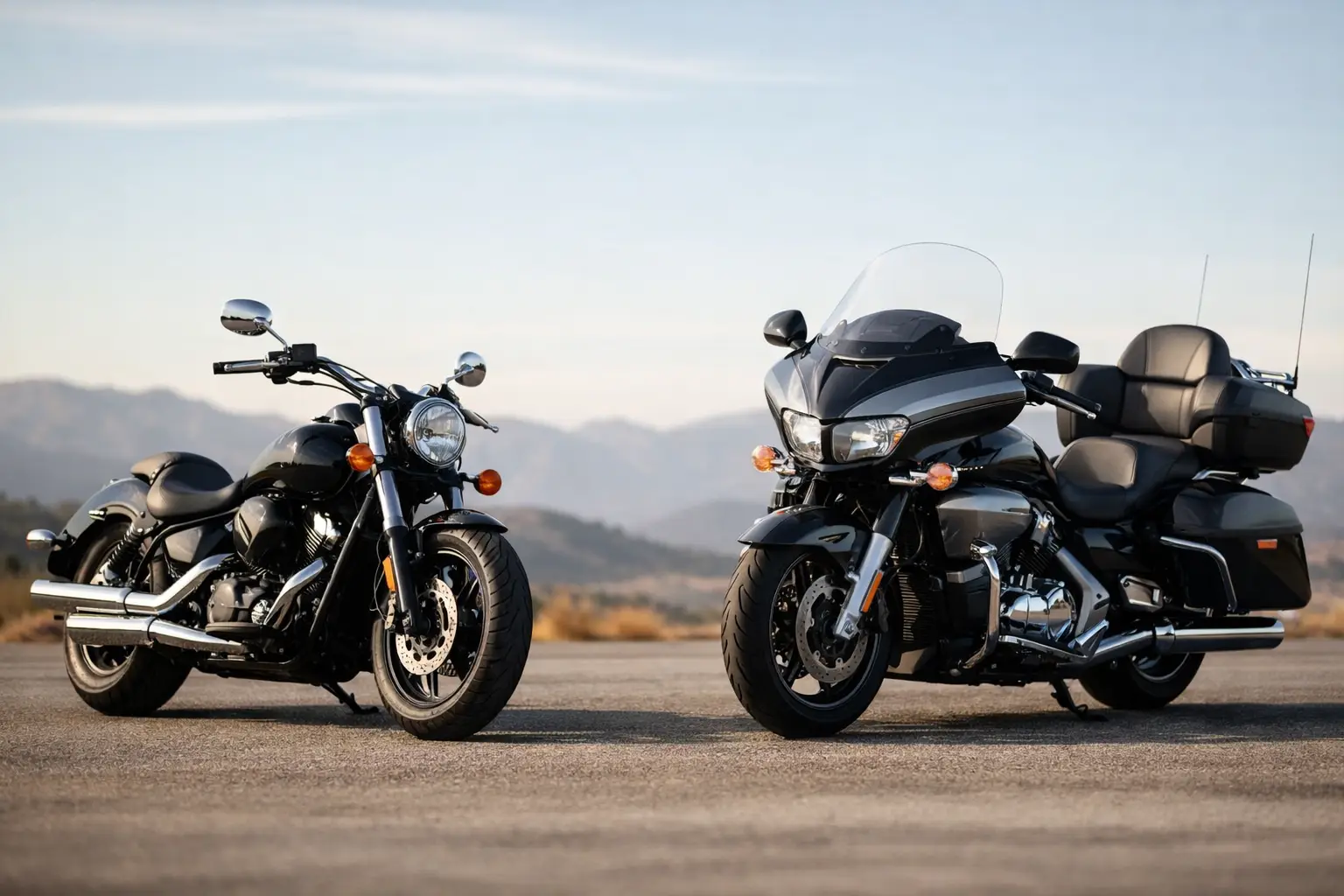
A cruiser is generally built around low seat height, relaxed ergonomics, accessible power, and an unhurried riding posture. Think feet-forward controls, a low-slung silhouette, and torque that arrives early in the rev range. Cruisers range from compact middleweights to heavyweight V-twins, but the common appeal is simple: they make slower scenic roads and casual stops feel natural.
A touring motorcycle is designed to cover distance with less fatigue. It typically brings a larger windshield or fairing, more weather protection, built-in luggage, a bigger fuel tank, a more supportive passenger setup, and electronics aimed at long days. Many touring models also have navigation-ready displays, cruise control, heated grips, adjustable suspension, and audio systems.
That description can make a touring bike sound like the automatic upgrade. It is not. More motorcycle is not always better motorcycle. A large bagger or full-dress tourer can be heavy in hotel parking lots, awkward on steep driveways, and more work on tight urban streets. A cruiser can be lighter, lower, easier to rent confidently, and more connected to the road at everyday speeds.
Comfort Is More Than a Soft Seat
New riders often judge comfort by seat height alone. That matters, particularly when you are stopping on uneven pavement or maneuvering a rental outside a crowded lodge. But comfort over a full day comes from several places: wind pressure, knee angle, handlebar reach, suspension travel, vibration, and how often you need to shift your body to stay fresh.
Cruisers usually offer a welcoming first impression. The low seat makes them approachable, and the upright-to-relaxed position works well for sightseeing rides. On a two- or three-hour loop through the hills above San Diego or along Highway 1, that laid-back posture can feel ideal.
Past that point, the trade-offs show up. Feet-forward controls can put more weight on your tailbone, and minimal wind protection means your core and shoulders are working harder than you realize. Add a crosswind, a long freeway transit, or a cold morning at elevation, and a basic cruiser setup can wear you down quickly.
Touring motorcycles earn their size on long days. A properly shaped windshield takes pressure off your chest, a broader seat spreads your weight, and floorboards or more neutral foot placement give you room to move. The best touring bikes are not just comfortable when you leave the hotel. They help you arrive with enough energy to walk around town, have dinner, and ride again tomorrow.
There is a caveat for shorter riders. Some touring models feel top-heavy at a stop, even when the listed seat height looks reasonable. Before booking or buying, sit on the bike with luggage loaded if possible. Make sure you can hold it securely on one foot and back it out of a parking space without wrestling it.
Handling: Relaxed Curves or All-Day Control?
A cruiser rewards a different pace. Its low center of gravity can make it feel planted, and its torque is satisfying when rolling out of small towns or passing on a two-lane road. Many riders love the way a cruiser settles into sweeping curves at 45 to 65 mph.
The limits usually appear on tighter roads. Reduced cornering clearance means floorboards or pegs may touch down sooner, and longer wheelbases can require more deliberate steering in hairpins. That does not make a cruiser incapable in the twisties. It means you should ride within the bike's geometry rather than expecting sport-bike responses on a road like California's Angeles Crest Highway.
Touring bikes can surprise riders here. They are heavy, but many carry that weight low and use stable chassis designs that feel composed in fast sweepers. Their suspension is usually better equipped for rough pavement and a loaded bike. Still, a full-size touring machine asks for more planning at low speed. U-turns, gravel pullouts, gas-station slopes, and stop-and-go traffic are where weight becomes real.
If your route is mostly scenic pavement with frequent stops, a cruiser is easy to enjoy. If you are covering mountain passes, variable weather, and several hundred miles a day, a touring bike offers more control when conditions stop being perfect.
Luggage, Passengers, and the Stuff Real Trips Require
This is where riders often underestimate their needs. A day ride requires water, a layer, rain gear, a phone charger, and perhaps a small tool kit. A multi-day trip adds clothes, toiletries, gloves for changing temperatures, tire repair gear, documents, and space for whatever you pick up along the way.
A touring motorcycle is ready for that load. Hard saddlebags keep gear dry and secure, a top case can hold a helmet at stops, and the luggage does not usually interfere with the passenger's space. The bike is engineered to carry people and cargo without feeling like an afterthought.
Cruisers vary widely. Some have decent saddlebags and a luggage rack; others offer little more than room for a small backpack. You can add soft bags, but they take planning. Keep them clear of hot exhaust, protect them from rain, and pack them evenly so the bike stays balanced.
For two-up riding, touring motorcycles usually win by a wide margin. A passenger needs a real seat, back support, secure foot placement, and wind protection. A cruiser may work for a short ride to lunch. For a weekend through the Blue Ridge or a desert run with 250-mile days, passenger comfort should be a deciding factor, not a detail.
Range and Weather Change the Equation
Fuel range matters most where stops are scarce or uncertain. A larger touring tank can reduce the pressure to refuel every couple of hours, which is valuable in parts of Utah, Nevada, Arizona, and the mountain West. It also gives you more freedom to choose the interesting gas stop instead of the first one you see.
Weather protection is equally practical. A fairing will not make rain enjoyable, but it can keep the blast off your chest and hands. Heated grips and better electrical capacity also matter when a sunny coastal morning turns into a cold, foggy afternoon.
Cruiser riders can close some of the gap with a windshield, upgraded seat, saddlebags, and rain gear. That setup is often a smart middle ground for weekend travel. Just be honest about the route. A modified cruiser is still not the same thing as a bike designed around six consecutive eight-hour days.
Choosing the Right Bike for a Rental Trip
When you rent, choose for the trip rather than the fantasy. A big touring bike may look like the obvious choice for a vacation, but it is a poor match if you have limited experience with heavyweight motorcycles or expect dense city riding. A cruiser can be the more confidence-building option for a first-time visitor who wants a relaxed Napa loop, Palm Springs backroads, or a coastal afternoon near Miami.
Choose a cruiser when your plan centers on day rides, scenic cruising, frequent stops, solo travel, and manageable speeds. It is also a strong pick when you value a low seat, lighter feel, and straightforward operation.
Choose a touring motorcycle when you are riding multiple days, carrying luggage, bringing a passenger, covering long highway stretches, or traveling through changing weather and elevations. The extra protection and storage become useful much sooner than most riders expect.
Route planning should follow the bike choice. A touring rider can comfortably link bigger distances and plan fewer overnight stops. A cruiser rider may enjoy a shorter loop with more viewpoints, coffee stops, and time off the freeway. CharterNow.ai can build around that reality, using your motorcycle style, experience level, available time, and live weather rather than handing every rider the same generic route.
The best choice is the one that lets you focus on the road ahead instead of counting down the miles until the next stop. Pick the machine that matches your actual trip, pack for the conditions, and leave enough room in the plan for the road that looks too good to pass by.