
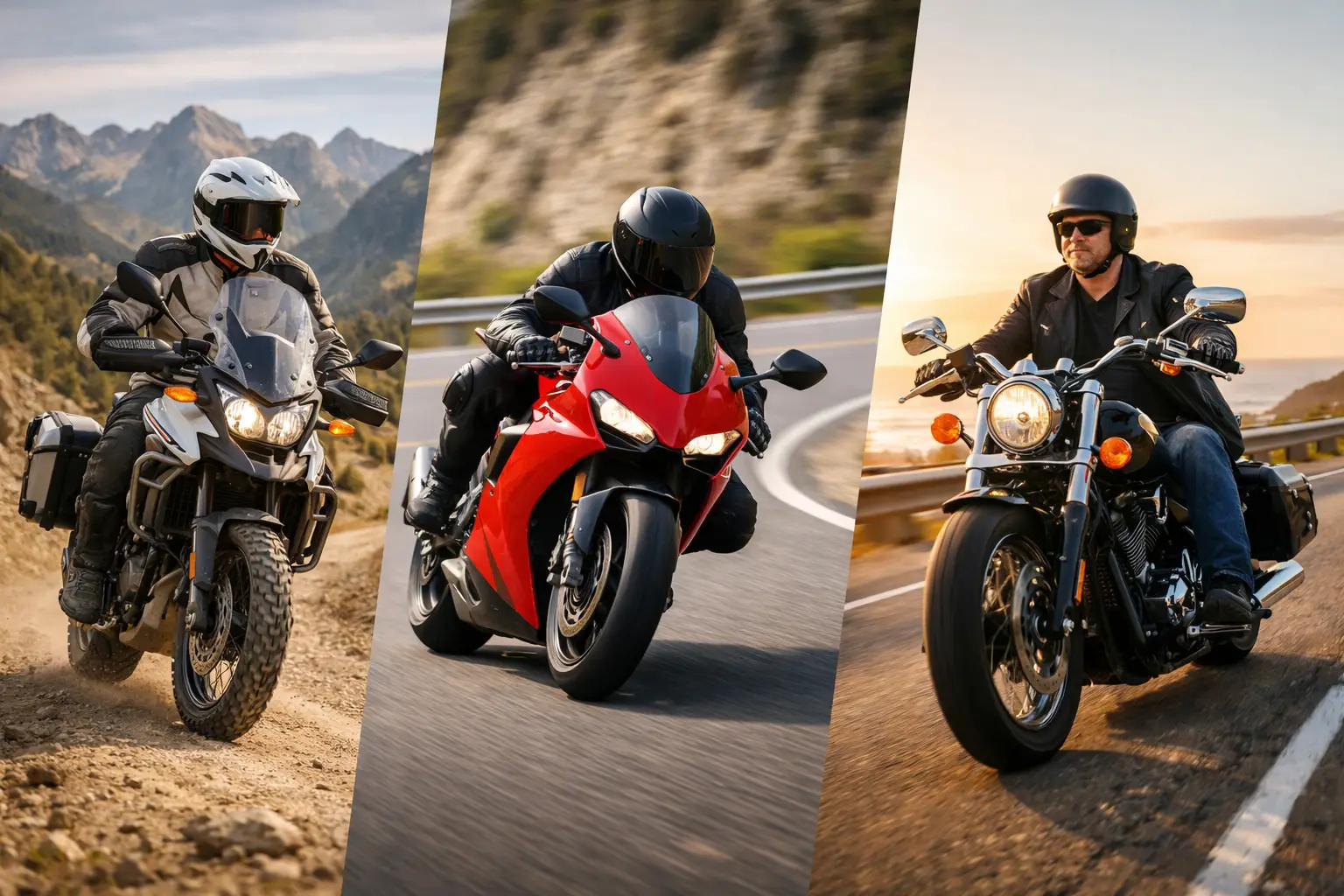
Plan motorcycle routes by riding style, from calm coastal cruises to technical twisties, with practical tips on pace, weather, mileage, and bike fit.
A road can be famous and still be wrong for your day. A tight mountain pass feels electric on a light bike with clear skies and fresh tires, but it can turn into work when you are two-up on a loaded bagger or riding through afternoon rain. The best motorcycle routes by riding style begin with an honest look at how you want to ride, not a search for the longest list of landmarks.
A good route has a rhythm. It matches your bike, your confidence, your available hours, and the kind of story you want to tell when you pull into the final stop. Start there, and route planning gets much simpler.
Pick the Ride Before You Pick the Road
Most disappointing rides are not caused by bad pavement. They happen when the route asks for something the rider did not sign up for: too many hairpins, too much freeway, a surprise gravel section, or a sunset arrival after the good light and energy have gone.
Before dropping pins on a map, decide which of these matters most: corners, scenery, distance, low-stress cruising, off-pavement exploration, or simply reaching a destination with time to enjoy it. Then account for the real-world variables. A 180-mile route in the Sierra foothills can fill a long day. The same mileage on California's Central Coast may leave plenty of time for coffee, overlooks, and a late lunch.
Your motorcycle changes the answer too. A naked bike rewards a compact loop with frequent stops. A touring bike makes long valley connectors less tedious. An ADV bike expands your options, but it does not make a deeply rutted forest road a smart choice after heavy rain.
Motorcycle Routes by Riding Style: Find Your Lane
The twisties rider: prioritize pavement, not mileage
For riders chasing lean angle and clean corner sequences, the best routes are usually shorter than expected. Look for two-lane roads with consistent pavement, predictable sightlines, and enough elevation change to keep the ride interesting without making every corner blind.
Build in a warm-up section before the technical miles. Starting cold on a tight road, especially behind slow traffic, is a fast way to turn a fun ride into a frustrated one. On popular roads such as California's Angeles Crest corridor or the hills around San Diego's backcountry, early weekday departures often mean cleaner pavement, lighter traffic, and fewer cyclists in the narrowest sections.
Avoid stacking three technical roads end to end just because the map says they connect. Fatigue shows up in braking and vision before it feels obvious. One excellent mountain section, a relaxed lunch stop, and a scenic return road often makes a better day than six hours of nonstop cornering.
The scenic cruiser: give the route room to breathe
Cruising riders are not trying to set a pace. They want rolling roads, shoreline views, historic towns, and stops that feel worth taking. A coastal route works beautifully here, but only if you plan around the reality of coastal weather and traffic.
For example, a ride along Highway 1 near Big Sur can be cool and foggy in the morning, even when inland temperatures are warm. Bring a layer, leave extra time for overlooks, and do not schedule a rigid arrival window. The same principle applies to the Blue Ridge Parkway, where lower speeds, wildlife, and pullouts make the day feel slower than the mileage suggests.
Choose one anchor stop rather than trying to visit every viewpoint. A bakery in a small town, a beach walk, or a quiet lunch with a view gives the route a purpose beyond following a blue line.
The long-distance tourer: protect your energy
Touring is about sustained momentum, not proving how far you can ride in one day. Interstate miles may be necessary, but they should serve the ride, not dominate it. Use them to reach a great region, then spend the best hours on secondary roads.
Plan fuel stops before you need them, particularly in desert areas, national forests, and sparsely populated mountain regions. A practical range buffer matters more when wind, elevation, or a loaded bike cuts fuel economy. On a multi-day trip, choose overnight towns with food, fuel, and a backup lodging option rather than stopping only when you are exhausted.
The trade-off is simple: ambitious daily mileage can cover more states, but it reduces your margin for weather, mechanical issues, and the kind of roadside detour that makes a trip memorable. For many riders, 250 to 350 varied miles is a full touring day. It depends on the roads, the bike, and whether you are riding solo or managing a group.
The newer or returning rider: choose confidence-building loops
The right first routes are not boring. They are forgiving. Look for daylight-friendly loops with clear pavement, moderate speeds, regular fuel access, and easy places to pause. Avoid routes that require a long freeway run just to reach the enjoyable section, or that put a steep, technical descent at the end of the day.
A confidence-building route lets you practice smooth throttle control, corner entry, and visual scanning without being pressured by traffic or terrain. It also has a simple bailout option. If the wind picks up, the temperature drops, or your energy fades, you should be able to shorten the loop without getting stranded on a remote road.
Ride with a smaller plan than your enthusiasm suggests. Finishing a 90-mile loop feeling sharp builds more skill than surviving a 220-mile day that leaves you tense and depleted.
The adventure rider: know what the surface is doing
Adventure routes demand more homework because the road can change overnight. A graded dirt road can be easy on a dry morning and slippery clay after an afternoon storm. Washboard, deep gravel, sand, water crossings, and snow closures all affect whether a route is enjoyable or a recovery mission.
Match the terrain to your actual setup. A large ADV bike with street-oriented tires is capable, but capability is not the same as comfort. Check recent weather, seasonal closures, fuel range, and whether a road is maintained. Download navigation before leaving cell service, carry water and a basic repair kit, and tell someone where you are headed.
The best ADV days mix surfaces with intention. A paved approach, a manageable forest section, and a scenic town for fuel creates a satisfying loop without gambling the entire day on one unknown trail.
Build a Route That Works in Real Conditions
Once you know your style, set a pace that matches it. Do not trust a map's arrival estimate as the whole story. It rarely includes photo stops, construction delays, fuel, gear changes, or the slower speed that comes with wet pavement and unfamiliar corners.
Weather deserves equal weight. Heat changes hydration needs and tire grip. Wind can make exposed bridges and desert highways tiring. Cold mountain rain can turn a route that looked mild into a high-focus ride. Check conditions at the start, highest point, and destination, not only in the city where you are sleeping.
For rental-based trips, keep the first day especially realistic. You may spend time at pickup adjusting controls, securing luggage, learning the bike's clutch feel, and getting clear of urban traffic. A 120-mile scenic loop near the rental location is often a smarter opening day than a rushed 300-mile push to a distant hotel.
This is where a motorcycle-specific planner earns its place. CharterNow.ai can shape an AI-powered itinerary around your dates, motorcycle type, skill level, ride duration, and goals, then factor in live weather and estimated ride times. You still make the final call, as every rider should, but you start with a route designed for your kind of day rather than a generic drive.
A Quick Pre-Ride Reality Check
Before committing, ask yourself four questions: Is this route enjoyable at the pace I actually ride? Does it leave room for fuel, food, and weather changes? Is the hardest section within my ability when I am tired? And if plans change, where do I turn around or cut across?
Those questions matter whether you are riding a rented cruiser outside Los Angeles, a sport bike through the Appalachians, or a loaded touring rig across the Southwest. The road does not need to be extreme to be memorable. It needs to fit.
Pick the style, check the conditions, and leave enough daylight for the road to surprise you in the good ways. The road is waiting. Are you ready?