
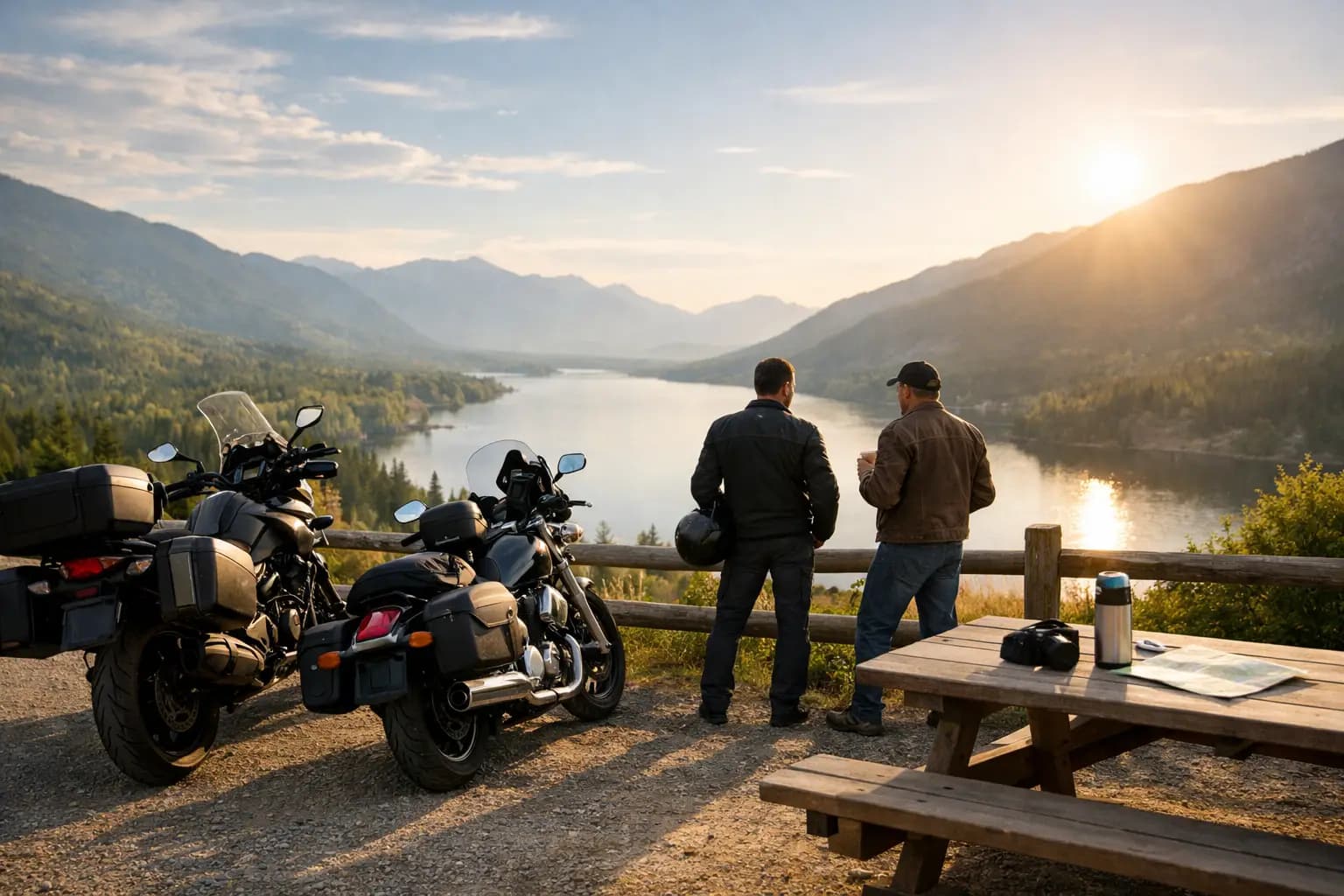
Learn how to plan motorcycle stops around fuel, weather, food, rest, and views so every mile feels safer, smoother, and worth riding before departure.
A great route can still turn into a long, dehydrated slog if the stops are wrong. Knowing how to plan motorcycle stops is what separates a ride that feels loose and memorable from one ruled by a low-fuel light, incoming rain, and a desperate search for food at 3 p.m. Stops are not interruptions to the ride. On a motorcycle, they are part of the ride.
The goal is not to stop every hour because a map suggests it. It is to build a rhythm that fits your bike, your body, the roads, and the reason you headed out in the first place. A relaxed coastal cruise, a technical mountain loop, and a fly-and-ride vacation all need different stop strategies.
Start With the Ride, Not the Pins
Before choosing gas stations, diners, overlooks, or hotels, decide what kind of day you want. A rider chasing tight California twisties may cover fewer miles than expected, while someone cruising open Nevada highways can cover serious distance but needs to watch fuel range and fatigue more closely.
Think in terms of moving time, not just mileage. One hundred miles on Highway 1 with photo stops, slow towns, and coastal traffic is a different day than 100 miles across the Central Valley. Likewise, 180 miles of Appalachian backroads can be more physically demanding than 300 miles on an Interstate.
A useful rule is to leave room in the schedule. If your navigation app says a route takes four hours in a car, do not assume four hours is your motorcycle day. Add time for gearing up, fuel, construction, scenic pullouts, slower corners, lunch, and the occasional route change. For most day rides, planning only 60 to 70 percent of the available daylight as saddle time keeps the pace enjoyable.
Plan Fuel Stops Around Your Real Range
Your fuel range is the first hard limit, especially on a rental bike or an unfamiliar motorcycle. Do not plan around the number you saw in a brochure. Plan around the conservative range you can count on when riding into wind, climbing grades, carrying luggage, or having fun with the throttle.
If your bike can usually go 180 miles on a tank, treat 120 to 140 miles as your practical planning range in remote country. That buffer matters in places where a station may be closed, out of service, or farther off the route than expected. It also means you can pass a crowded station without turning the decision into a gamble.
Fuel stops do more than fill the tank. They are the best time to drink water, check tire condition, clean a bug-covered visor, and look at the weather ahead. On a group ride, they are also where the pace gets reset. If someone is getting tense, cold, or tired, it is better to notice it beside a pump than halfway through a mountain pass.
When riding in dense areas, you can be more flexible. On a route through Big Sur, the Blue Ridge Parkway, Utah canyon country, or the deserts outside Palm Springs, identify dependable fuel well before you leave. Small towns can be part of the charm, but they should not be your only fuel plan.
Use Stops to Manage Your Energy
Fatigue arrives quietly on a motorcycle. Wind noise, heat, vibration, traffic, and constant cornering create more mental load than most riders realize. You may feel fine until your braking gets sloppy, your shoulders lock up, or you start missing obvious signs.
For a full-day ride, a short break every 90 minutes or so works well for many riders. That does not mean a 45-minute stop every time. Often, 10 minutes is enough: helmet off, water, a stretch, and a few deep breaths before getting back on the road.
The stop interval should shrink in difficult conditions. Add more breaks when temperatures are high, rain is steady, the route is highly technical, or you are riding two-up. Newer riders may also benefit from shorter riding blocks, particularly on roads with constant elevation changes and blind corners. There is no prize for riding past the point where you are still making clean decisions.
Food deserves planning, too. A huge fried lunch in the middle of a long hot ride can make the afternoon feel heavy. Many experienced riders favor a lighter meal, then keep easy snacks available for later. A local taco stand, roadside café, or grocery counter can be a great destination stop, but know its hours. In smaller towns, the kitchen may close well before dinner.
Choose Stops That Give the Route a Shape
The best motorcycle stops have a purpose. They might offer a view, a meal, fuel, a reset, or a reason to turn around. When every stop is random, a route can feel like a series of errands. When they are chosen well, the day has a natural story.
For example, a San Francisco-to-Big Sur ride might begin with fuel outside the city, pause at a coastal overlook after the morning traffic clears, stop for lunch in a town with reliable food options, then use a final viewpoint as the turnaround marker before the cooler return ride north. The route is still about the road, but the stops create pacing and prevent the day from becoming a rushed out-and-back.
Avoid putting every scenic stop into the itinerary. A packed map can make riders feel obligated to pull over every 20 minutes. Pick one or two anchor stops you genuinely care about, then leave room for the unmarked turnout, fruit stand, historic bridge, or roadside sign that catches your attention. Those unplanned moments are often the ones you remember.
A good stop should also be easy to enter and leave. An overlook with a safe pull-off is better than a scenic point that requires an awkward U-turn across fast traffic. On busy weekends, popular destinations may have crowded lots, loose gravel, and limited space to maneuver. If you ride a heavy touring bike, a loaded ADV bike, or an unfamiliar rental, parking conditions matter more than they do on a lightweight standard.
Build Weather and Gear Checks Into the Day
Weather changes the value of every stop. A 10-minute break before a high-elevation section is the right time to add a layer, swap gloves, close vents, or put rain gear where you can reach it. Waiting until you are already shivering on the shoulder makes a simple adjustment harder than it needs to be.
Check live weather at least once before the route gets committed and again at a major fuel or meal stop. Pay attention to wind, not just rain. Strong coastal gusts, desert crosswinds, and exposed mountain ridges can be more tiring than a light shower. If thunderstorms are moving through later in the day, an early lunch or a shorter loop may be the smarter call.
This is where a motorcycle-specific planner earns its place. CharterNow.ai can build a route around your available time, riding style, skill level, and live weather, so stops fit the actual ride rather than being copied from a generic road-trip map. Still, use your judgment on the ground. A route plan is a strong starting point, not a contract.
For Multi-Day Rides, Stop Before You Need To
On overnight trips, the most common planning mistake is booking lodging too far down the road. Riders see a manageable mileage number and forget that the final hour often happens after weather, traffic, late fuel, and tiredness have already taken their toll.
Aim to arrive with daylight left, particularly in unfamiliar areas. This gives you time to find the hotel, unload, deal with gear, inspect the bike, and get dinner without rushing. It also leaves a margin for a closed road, a slow scenic section, or a stop you decide is worth lingering over.
For fly-and-ride trips, build an easy first day. Picking up a rental, getting familiar with its controls, adjusting luggage, and navigating out of an unfamiliar city all take energy. Keep the first destination close enough that you can settle in before dark. Save the big-mileage day for after you have found your rhythm with the bike.
Keep a Flexible Stop Plan
A practical motorcycle stop plan has three layers: required stops for fuel and lodging, likely stops for food and rest, and optional stops for views or local detours. That structure gives you direction without turning the day into a checklist.
Before departure, download navigation for areas with weak service, carry water, and know where the next dependable fuel is after each major stop. Then let the road have some say. If the weather is perfect and the curves are flowing, stay out a little longer. If the wind is draining you or the group is fading, cut the optional section without guilt.
The ride does not become better because you reached every pin. It becomes better when you pull in at the end of the day with enough energy to look back at the road and think, one more mile would have been too many.