
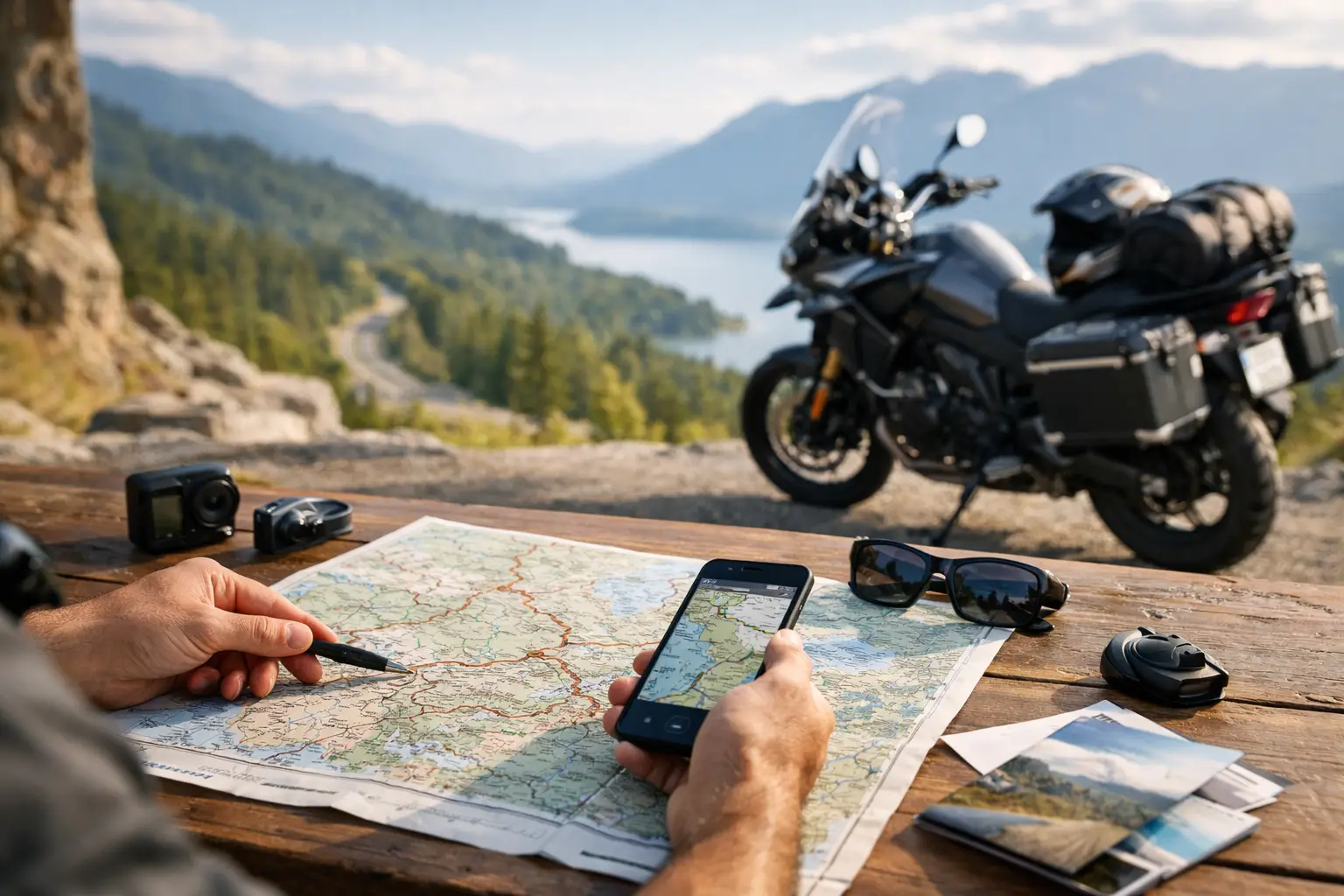
Plan motorcycle travel around your skills, time, weather, and bike. Build safer, better routes for day rides, weekend loops, and fly-and-ride trips well.
A great motorcycle trip rarely goes wrong because the rider picked the wrong famous road. It goes wrong because the route looked perfect on a map but ignored the real conditions: a late rental pickup, coastal fog, a passenger who needs more breaks, a bike that is not built for gravel, or 300 miles that turn into a seven-hour grind. Motorcycle travel works best when the ride is built around the rider, not just the destination.
That sounds obvious, but it changes how you plan. A weekend escape from Los Angeles, a fly-and-ride vacation from San Francisco, and a first rental trip through the Blue Ridge each need a different approach. The best route is not necessarily the fastest, twistiest, or most photographed. It is the one you can ride confidently, enjoy fully, and finish with enough energy to want to do it again tomorrow.
Start Motorcycle Travel With Your Actual Ride Day
Before choosing roads, define the shape of the day. How many hours do you truly want to be in the saddle? Not the time between breakfast and dinner, but actual moving time plus fuel, photos, traffic, gear changes, and stops to warm up or cool down.
For most riders, four to six hours of moving time makes a satisfying full day on unfamiliar roads. That may only be 150 to 250 miles in mountain country, along the Pacific Coast, or anywhere with small towns and frequent curves. A 300-mile day can be easy on open Western highways and exhausting on tight Appalachian backroads. Maps tend to treat every mile equally. Your wrists, focus, and fuel range do not.
Skill level matters just as much. Newer riders often have more fun on a route with a few clean, predictable curves and regular places to reset. Experienced riders may seek technical switchbacks, high-elevation passes, or a long loop with several distinct road types. Neither choice is more legitimate. The point is to match the intensity to the rider instead of turning every ride into a test.
If you are traveling with a passenger, riding a loaded bagger, or picking up an unfamiliar rental, give the itinerary more margin. The first hour on a bike you do not know is not the time to chase a tight canyon road before you have adjusted the controls, mirrors, suspension, and luggage.
Build a Route With a Reason to Stop
The routes riders remember are rarely just a string of turns. They have rhythm. A good day might start with an easy run out of the city, build into a scenic ridge road, pause at a small-town lunch stop, then return on a different road before afternoon weather changes the plan.
Look for natural anchors every 60 to 90 minutes: fuel, coffee, a viewpoint, a state park, a roadside diner, or a place where everyone can take off a helmet for ten minutes. These are not detours from the ride. They keep the ride enjoyable and make it easier to spot fatigue before it becomes a problem.
A loop is often better than an out-and-back route, especially on a short trip. It gives you new scenery without requiring a complicated hotel transfer, and it reduces the temptation to rush back over the same road after dark. Around San Francisco, for example, a coastal ride can be paired with inland redwood roads to create two completely different riding experiences in one day. In Southern California, a mountain loop may combine fast desert transitions with cooler forest sections, but only if the weather and elevation cooperate.
There is a trade-off. Loops can make it harder to shorten the day if conditions shift, while an out-and-back route is simpler to abandon. When rain, wind, or extreme heat is possible, choose a route with easy bailout points rather than committing to a remote road with no quick return.
Use Weather as a Routing Tool, Not a Final Check
Weather is not just a packing question. It should influence where you ride and when. On the California coast, morning marine layer can make a dramatic overlook feel cold, damp, and low-visibility. Inland heat can become punishing by midafternoon. In the Rockies, a clear morning can turn into a lightning-risk afternoon at elevation. In the Southeast, summer rain may be brief, but wet leaves, painted lines, and standing water can linger in shaded curves.
A useful plan checks conditions at three levels: the start point, the highest or most exposed portion of the route, and the destination. Temperature can vary by 20 degrees or more between a coastal town and a mountain pass. Wind matters on bridges, ridgelines, and open desert. Rain chance matters less than the likely timing and intensity of the storm.
Live weather insights are especially valuable on multi-day rides. If day two is likely to be the wet day, shift the itinerary. Use that day for a shorter scenic route, a museum stop, or a city-to-city transfer on easier roads. Save the high pass, remote canyon, or gravel section for the stable window. Flexibility is a better travel skill than stubbornly following a plan made two weeks ago.
Choose the Right Bike for the Route
The motorcycle changes the trip. A cruiser with a low seat can be ideal for relaxed coastal cruising and city exits, but it may need more care on uneven pavement and sharp switchbacks. A sport-touring bike can make a long day disappear, especially with wind protection and luggage. An adventure bike opens access to forest roads and rougher routes, yet tall seat height and loose surfaces can add stress for riders who are new to both.
For rental-based motorcycle travel, be honest about familiarity. The bike you want in a photo is not always the bike you want after six hours in wind and traffic. Consider seat height, passenger comfort, luggage capacity, fuel range, and whether the route includes freeway miles. If your plans involve a camera bag, rain layer, water, and an extra set of gloves, make sure there is a real place to carry them.
A rental pickup also shapes the first day. Allow time for paperwork, a walk-around, gear fitting, and getting comfortable with the clutch, brakes, turn signals, and display. Plan an easy first leg out of town. The scenic road can wait until you have settled into the machine.
Keep Your Itinerary Ambitious, Not Fragile
The strongest itineraries have a clear Plan A and a simple Plan B. Plan A is the road you came to ride. Plan B is not a failure. It is the shorter route, lower-elevation option, or faster return that lets you respond to construction, wind, fatigue, or a weather front without arguing with the clock.
Before leaving, confirm five practical details:
-
Fuel availability, especially on remote roads and Sunday mornings
-
Road surface and seasonal closures on mountain, park, and forest routes
-
Sunset time, because unfamiliar curves after dark change the entire ride
-
Cell coverage or offline navigation for isolated areas
-
The last realistic check-in time for your hotel, campground, or rental return
Those details are where a smooth trip is won. A route may look like a clean four-hour ride online, but a closed pass, a missed fuel stop, or a 45-minute wait at a popular overlook can change the day quickly.
This is also where a motorcycle-specific planner earns its place. CharterNow.ai can build an AI-powered route around your destination, dates, riding experience, preferred bike style, available hours, and goals, then layer in live weather, ride times, scenic stops, navigation, and nearby rental options. That means less time juggling tabs and more time deciding whether you want ocean views, mountain curves, or a relaxed loop with a great lunch stop.
Ride the Road You Have, Not the One You Planned
Even the best plan needs room for the road to speak. Maybe the overlook is fogged in, but the forest road below is dry and quiet. Maybe the famous highway is packed, while the county road one valley over has clean pavement and no traffic. Maybe the group is having such a good time at lunch that the shorter return route becomes the right call.
That is not lost mileage. It is the difference between checking off roads and actually traveling by motorcycle. Leave enough space in your day to take the unexpected turn, stop when the light gets good, and return before the ride becomes work. The road is waiting. Make sure the plan leaves room to enjoy it.