
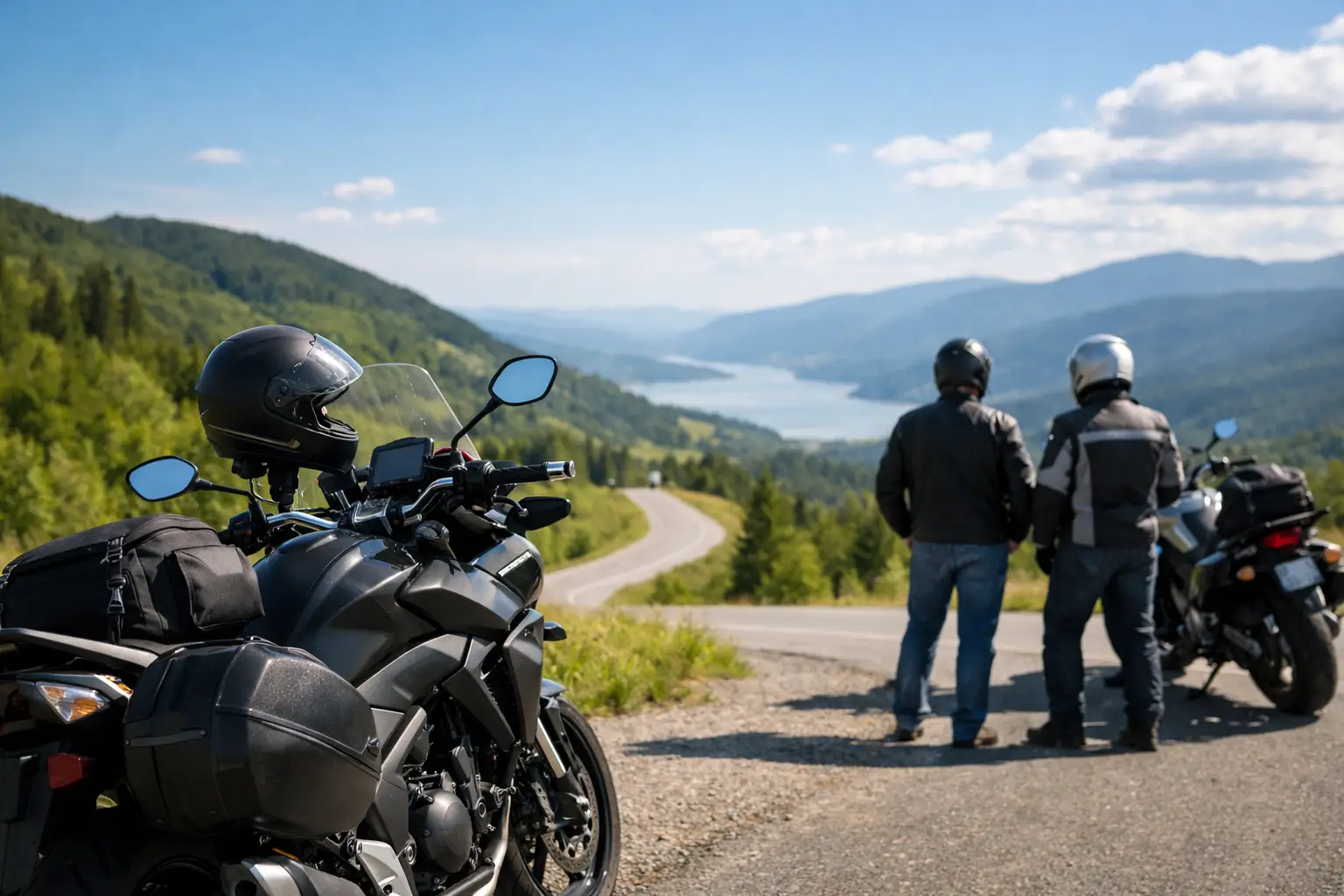
Use this motorcycle daytrip guide to plan a safer, better-paced ride with live weather, fuel stops, scenic roads, and time to enjoy every mile safely.
A great day ride is rarely about piling on the most miles. It is the kind of ride where the first set of curves wakes you up, the lunch stop arrives before you are tired, and you pull into the driveway with enough daylight and energy to want to do it again next weekend. This motorcycle daytrip guide is built around that goal: a route that feels full without becoming a forced march.
The difference between a memorable loop and a long, frustrating day usually comes down to pace. Riders often plan from a map's mileage estimate, then discover that a 180-mile mountain-and-coast route takes far longer than expected. Curves, overlooks, road construction, slow towns, fuel stops, photo breaks, and changing weather all count. Plan for the riding experience, not just the distance.
Start With Your Real Riding Window
Before selecting a road, decide how much time you truly have from wheels rolling to wheels parked. For many riders, that is five to seven hours, not the entire daylight window. Build in time for gearing up, a pre-ride walkaround, a coffee stop, lunch, fuel, and the unexpected delay that always seems to appear near the best road of the day.
A useful rule is to separate moving time from trip time. On open desert pavement, you may cover 50 or more miles in an hour. On a technical mountain route with tight corners, traffic, and elevation changes, 25 to 35 miles per hour can be more realistic. A 150-mile loop can be relaxing or exhausting depending on the road.
For newer riders, a 100- to 140-mile day with forgiving curves and frequent services is plenty. Experienced riders on familiar terrain may enjoy 200 miles, especially if much of it is flowing highway between the good sections. There is no prize for finishing a route with sore wrists, a low fuel light, and no time to stop at the overlook.
Build a Route With a Purpose
The best day trips have an anchor. It might be a coastal lunch in Cambria, a pie stop in Julian, a lookout in Angeles National Forest, or a quiet lake on the far side of a mountain pass. Give the ride one or two reasons to exist, then choose roads that make getting there worthwhile.
A loop is usually the smart choice. You avoid retracing the same pavement, keep the day feeling fresh, and have more options if traffic or weather changes the plan. Out-and-back routes still work when the destination road is the attraction, such as California's Highway 1 where conditions allow, or a favorite canyon with reliable pavement. Just be honest about whether riding the same technical section in reverse late in the day will still be fun.
Use fast roads strategically. A short highway leg at the beginning can get you away from city traffic and into the hills before the roads fill up. Another faster section near the end provides an easy way home when afternoon fatigue sets in. Save the twisties for the part of the day when you are alert, not hungry, and unhurried.
Match the road to the rider and motorcycle
A scenic route is not automatically a good route for every rider. A newly licensed rider on a rental cruiser may be happier with broad sweepers, clear sightlines, and predictable pavement than a narrow, gravel-strewn mountain road. An experienced rider on a sport-touring bike may want elevation, linked corners, and a longer technical section. An ADV rider may welcome a maintained forest road, while a passenger may not.
Think about the bike's range and personality, too. A large touring motorcycle makes a long coastal loop feel easy, but it may be less enjoyable on a tight road with rough turnarounds. A smaller rental bike is ideal for urban escapes and canyon runs, but a 200-mile route with big elevation changes may demand more fuel planning and more breaks.
Check Conditions Like a Local Would
Weather is not just a rain-or-no-rain question. On a coastal California ride, the inland temperature can be 85 degrees while the shoreline sits under 55-degree fog. In the mountains, a sunny forecast at the trailhead says little about wind, cold, or wet pavement at higher elevation. Desert routes can be comfortable in the morning and punishing after lunch.
Check conditions for the route's high point, low point, and destination, not only your departure city. Look at wind direction and gusts, hourly temperatures, rain timing, and whether fog is likely to linger. If the ride involves a pass, verify that it is open and consider recent storms, snowmelt, rockfall, and wildfire-related closures.
Then make a simple decision before leaving: what would cause you to shorten, reroute, or cancel? A chance of light rain might be manageable on familiar roads with good tires. Heavy gusts along an exposed coast, lightning in the mountains, or a severe heat advisory are different. Good planning gives you permission to change the plan without treating it as a failed ride.
Plan Fuel, Food, and a Bailout Route
Never make a daytrip depend on one remote gas station being open. Identify fuel before the route's longest isolated section, especially on mountain, desert, and rural backroad rides. Do not wait for the low-fuel warning if you are heading into an area with limited services. Rental motorcycles can have different real-world range than the spec sheet suggests, particularly with a passenger, luggage, high winds, or aggressive climbing.
Food deserves the same attention. A proper lunch stop can reset your concentration, but a crowded destination restaurant can also swallow 90 minutes of a short riding day. For a tight schedule, carry water and a snack, then treat a restaurant stop as a bonus rather than the route's only source of calories. Hydration matters even in cool weather. Wind and layers can hide how much water you are losing.
Every route should also have a bailout option. This is the road that lets you skip the final canyon, avoid a storm cell, or get home early without improvising while tired. On a loop, that may be a state highway that cuts across the middle. On a point-to-point ride, it may be the nearest freeway access. Knowing it exists makes the whole day more relaxed.
Pack for the Ride You May Get
Daytrip packing should be light, but it should solve common problems. Bring your license, registration or rental documents, insurance information, charged phone, payment method, water, and a compact tire repair and inflation solution if you know how to use one. Add earplugs, sunglasses or a clear visor option, and a warm or waterproof layer that fits over your riding gear.
The layer is often the difference between enjoying a coastal overlook and racing through it because your hands are numb. If your plan crosses climates, pack for the coldest part first. You can vent a jacket in the heat. You cannot create insulation halfway up a foggy ridge.
Before departure, do a quick walkaround: tire condition and pressure, oil level if applicable, lights, brakes, chain condition on chain-driven bikes, and fuel level. If you are renting, take photos of the motorcycle at pickup, confirm roadside-assistance procedures, and ask about mileage limits or roads the rental provider excludes.
Use Technology Without Letting It Run the Ride
Navigation is useful, but a phone mount is not a substitute for route awareness. Review the route before leaving so you know the major towns, turns, fuel stops, and high-risk sections. Download offline navigation if service may disappear. Keep your device charged, but do not chase every reroute suggestion when it sends you onto an unverified road with a misleadingly short arrival time.
This is where a motorcycle-specific planner earns its place. CharterNow.ai can build a route around your available time, riding level, bike style, preferred intensity, and live weather instead of handing you the quickest car route. The result should still be reviewed by the rider, because local conditions change, but it removes much of the tab-switching between maps, forecasts, road closures, and rental searches.
Ride the Plan, Not the Clock
Once you are moving, the plan should reduce pressure, not create it. Take the first 20 minutes easy while your body settles into the bike and the tires come up to temperature. On unfamiliar roads, ride within your sightline and leave room for the things that show up around blind corners: gravel, deer, cyclists, stopped cars, or a tourist crossing the centerline while looking at the view.
Reassess at every fuel stop. Are you ahead or behind schedule? Is the weather still behaving? Is your passenger comfortable? If the answer points toward a shorter route, take the shorter route. A good daytrip is measured by how it felt, not whether every planned waypoint turned blue on the map.
Pick one road worth remembering, one stop worth lingering at, and a route home that does not demand heroics. The road is waiting. Give yourself enough time to enjoy it.