
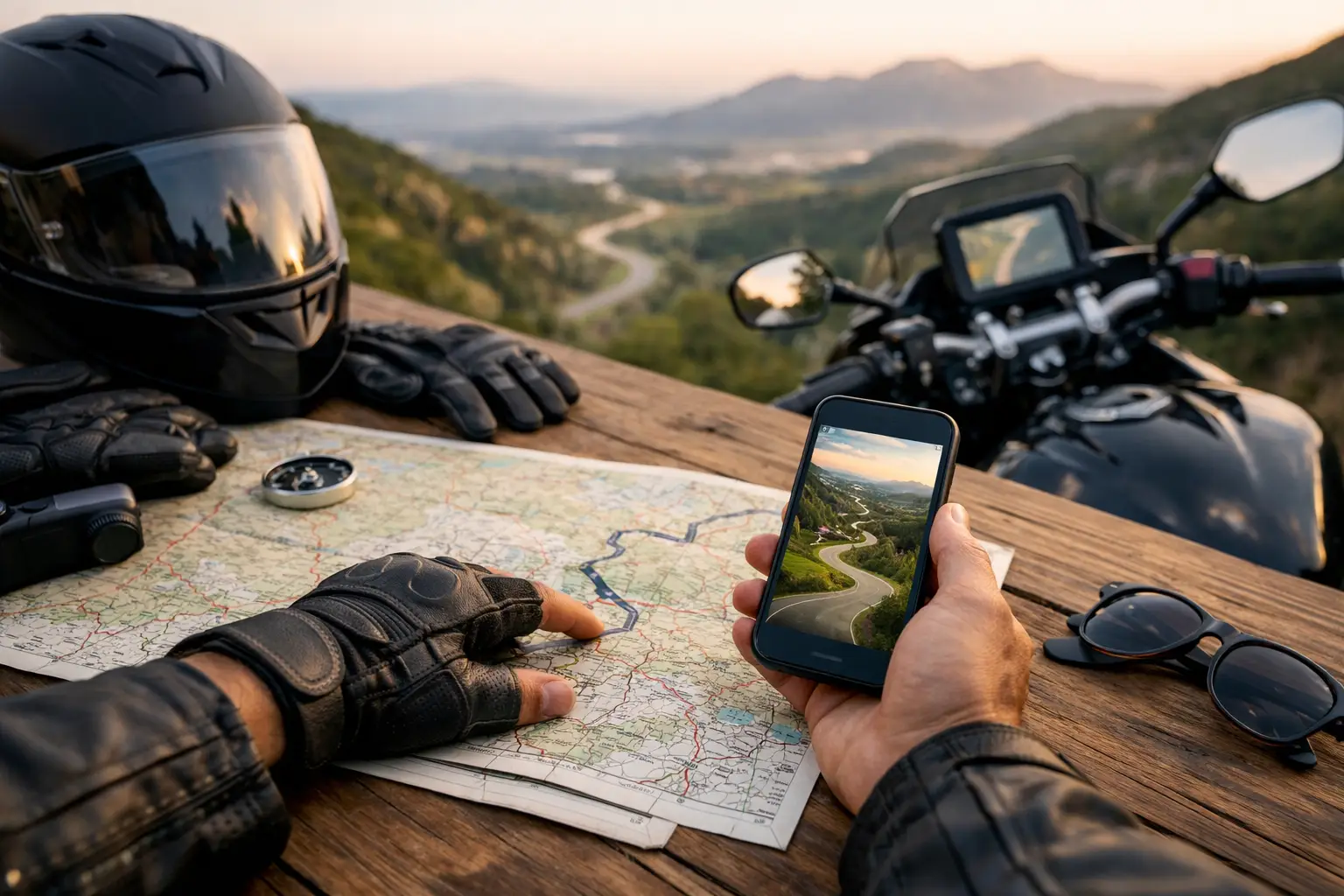
Motorcycle route personalization builds safer, better rides around your skill, bike, time, weather, and the roads you actually want to ride every day.
A great ride can fall apart before the first corner. You leave San Francisco expecting a relaxed coastal run, hit fog at Pacifica, traffic near Half Moon Bay, and realize the route saved in your phone includes three more hours than you have. Motorcycle route personalization fixes that gap between a road that looks good on a map and a ride that actually works for you.
The best route is not automatically the curviest, shortest, or most famous. It is the one that suits your bike, confidence, available daylight, tolerance for traffic, and reason for riding. Some days that means a low-pressure loop with a coffee stop and wide, predictable corners. Other days, it means chasing technical mountain pavement before lunch and taking the long way home.
What Motorcycle Route Personalization Really Means
Personalized route planning starts with the rider, not the pin on the map. A general mapping app can calculate a path from Los Angeles to Ojai. A motorcycle-specific plan asks a more useful set of questions: Are you on a rented Harley, a sport bike, or a loaded adventure bike? Is this your first time riding Southern California roads? Do you have four hours or an entire weekend? Are you looking for scenic cruising, fast sweepers, tight twisties, or a route that avoids unnecessary stress?
Those answers change the ride dramatically. A newer rider on a rental may enjoy the open curves of Highway 33 toward Ojai, with enough time built in for fuel and photo stops. A local rider who knows the area may want a longer loop through the back roads around Pine Mountain, assuming weather and road conditions cooperate. Neither route is objectively better. They serve different riders.
Personalization also means planning for real-world friction. A road may be beautiful but crowded every Saturday morning. A mountain pass may carry snowmelt, gravel, or cold shade long after the forecast says the day will be warm. A route that is comfortable on a nimble middleweight can become tiring on a heavy touring bike when it stacks tight switchbacks late in the day.
Start With the Ride You Want, Not the Destination
Most riders begin with a destination: Big Sur, Joshua Tree, the Blue Ridge Parkway, the Smokies. That is natural, but it can lead to one-dimensional planning. The destination becomes the whole mission, and the actual riding gets reduced to whatever road connects point A to point B.
Start instead with the experience you want from the saddle. If you are visiting California for a fly-and-ride trip, you may want Pacific views, a few memorable curves, and enough margin to stop without watching the clock. If you live near San Diego and only have a Sunday morning, you might want clean mountain pavement, cooler temperatures, and a lunch stop before the afternoon traffic builds.
A useful trip brief includes five details: where you start, how much time you truly have, what you ride, your comfort level, and what makes the day worthwhile. The last part matters more than riders sometimes admit. "I want ocean views" creates a different route than "I want technical corners," even if both rides begin in Monterey.
Time Is More Than Mileage
Motorcycle travel time is rarely linear. Eighty miles of coastal highway can take longer than 140 miles of open inland pavement, especially when there are overlooks, small towns, fog, and weekend traffic. Mountain roads add another layer. A route with constant elevation changes and blind corners may be fantastic, but it asks more from your attention and body than its mileage suggests.
Build around ride time, not just distance. For a day trip, a good target is often a route that leaves room for breaks, fuel, weather changes, and one unplanned stop that turns out to be the highlight. On a vacation ride, that margin is even more valuable. Nobody wants to reach a hotel exhausted because a supposedly scenic detour became a six-hour push in crosswinds.
Match the Route to the Motorcycle
The same road feels different depending on the machine beneath you. That is why bike type should shape the route rather than appear as an afterthought.
A cruiser is often perfect for broad sweepers, coast roads, desert highways, and relaxed scenic loops. It can handle tight roads too, but a heavily loaded bagger may not be the right tool for an aggressive all-day switchback route. Sport bikes reward clean pavement and linked corners, although a rider should still account for fuel range and a more committed riding position. Adventure bikes open up forest roads and mixed-surface routes, but only when the rider has the skill, tires, and willingness to deal with changing traction.
Rental riders need to be especially honest here. A motorcycle that feels comfortable during a 20-minute pickup ride may feel very different after two hours of wind, heat, and unfamiliar curves. If you are renting in Las Vegas for a Zion or Valley of Fire trip, choose a route with manageable distances and reliable fuel stops while you learn the bike.
Route personalization should also consider passenger comfort. A solo rider may be happy with a rougher scenic road or a long technical stretch. With a passenger, frequent stops, smoother pavement, and a more conservative daily mileage target often make the day better for everyone.
Let Weather Change the Plan
Weather is not just a packing question. It is a routing question.
A warm forecast in a city can hide cold, wet conditions at elevation. On a Northern California ride, inland heat may push you toward the coast, while dense marine fog can make that same choice less appealing early in the morning. In the Southwest, summer heat can turn a low-desert afternoon into a draining experience, making an early start and higher-elevation roads the smarter move.
Live weather matters because conditions affect the character of a road. Rain raises the stakes on painted lines, tar snakes, leaf-covered corners, and polished pavement at intersections. Strong wind can make exposed coastal sections tiring. Extreme heat changes hydration needs and can make heavy traffic feel like work rather than freedom.
The practical move is not always canceling a ride. Sometimes it means reversing a loop, leaving earlier, choosing a lower pass, or replacing a remote back road with a better-traveled scenic highway. Flexibility is part of good route planning, not a compromise.
Build in Confidence, Not Just Excitement
There is a difference between a route that challenges you and one that overwhelms you. A rider developing cornering confidence does not need a dull straight line, but they also do not need an unfamiliar mountain road with steep drop-offs, decreasing-radius turns, and no easy turnaround.
Confidence-building routes tend to have predictable pavement, regular services, moderate traffic, and enough curves to practice smooth inputs. Think of a well-paced loop rather than a road chosen solely for its reputation. The goal is to finish the day wanting another hour in the saddle, not feeling lucky to be parked.
Experienced riders can personalize for intensity without treating every ride like a lap session. Technical roads deserve extra time, a larger fuel margin, and an early start before traffic and heat change the equation. If a road is known for blind corners or weekend congestion, ride it at a pace that leaves room for the unexpected. The best twisties are still public roads.
Turn a Route Into a Usable Itinerary
A line on a map is only the skeleton of a trip. A usable motorcycle itinerary gives the route some muscle: expected ride time, fuel rhythm, weather awareness, scenic stops, food options, and a reasonable finish point.
For example, a San Francisco to Big Sur loop should not simply say "take Highway 1." It should account for departure timing, coastal temperatures, potential traffic, lunch options, daylight, and whether the rider plans to return the same day. It may make more sense to create a shorter Monterey-area loop for someone with limited time, or an overnight plan for a traveler who wants to enjoy the coast instead of racing it.
This is where AI-powered planning can save serious research time. CharterNow.ai can turn a conversation about your dates, riding experience, preferred motorcycle style, and goals into a route built around the ride you actually want. Instead of jumping between maps, weather tabs, rental listings, and old forum threads, you can begin with a clear plan and adjust it as conditions change.
The Best Personalized Route Leaves Room for the Road
No plan should be so tight that it removes the joy of noticing a hand-painted pie sign, a quiet overlook, or a side road that deserves a future ride. Personalization is not about controlling every mile. It is about taking care of the decisions that can ruin a day, so you have more attention left for the ones that make it memorable.
Tell the planner what you ride, how you ride, and what kind of day you want. Then give yourself enough time to follow the curves, watch the weather, and let the road surprise you in the right ways.